
About KA-BAR
Iconic American Military & Field Cutlery Since 1898

KA-BAR: History & Engineering
Historic Olean, New York knifemaker behind the WWII USMC 1217 Fighting/Utility knife, Becker Knife & Tool bushcraft blades, and TDI law enforcement knives.
Tracing its American cutlery lineage to 1898 in western Pennsylvania before settling permanently in Olean, New York, KA-BAR Knives, Inc. is one of the most recognized fixed-blade manufacturers in military and outdoor history. Originally organized as the Tidioute Cutlery Company and later the Union Cutlery Company, the firm adopted the KA-BAR trademark in the early 20th century before immortalizing the name during World War II. Submitted to the U.S. Marine Corps in late 1942 as the 1219C2 fighting/utility knife, the stacked-leather-handled carbon-steel blade proved so ubiquitous across the Pacific Theater that Marines simply called every knife of its pattern a 'KA-BAR.' Acquired by Olean-based Alcas Corporation (parent of Cutco Cutlery) in 1996, KA-BAR today manufactures its classic USMC blades alongside Ethan Becker's bushcraft series, John Benner's TDI law enforcement line, and historic Ek Commando designs.
Origins, Name Legend & World War II Milestones
KA-BAR's roots begin in 1898 with a group of 38 cutlers who formed the Tidioute Cutlery Company in Tidioute, Pennsylvania. After reorganizing as the Union Cutlery Company and relocating to Olean, New York in the early 1900s, the firm built pocketknives, straight razors, and hunting blades for working outdoorsmen. According to company archives, the brand's famous name emerged from an illegible thank-you letter sent by a fur trapper who wrote that his Union Cutlery knife helped him kill a wounded bear after his rifle jammed - only the letters 'k a bar' remained readable, inspiring the company to adopt KA-BAR as its trademark and eventually its corporate identity.
World War II elevated KA-BAR from a regional cutlery house to an American icon. In November 1942, Union Cutlery collaborated with U.S. Marine Corps quartermasters to design a sturdier combat and field utility knife to replace fragile World War I trench daggers. Designated the 1219C2 (and Navy Mark 2), the 7-inch clip-point carbon-steel blade with a fuller, steel guard, and stacked-leather grip was produced by the hundreds of thousands for Marines, sailors, and soldiers. After decades of corporate ownership changes in the late 20th century, Olean-based Alcas Corporation acquired KA-BAR in 1996, returning flagship USMC knife production home to Olean, New York right beside sister company Cutco Cutlery.
Landmark Platforms
At the heart of KA-BAR's catalog remains the USMC Fight/Utility 1217, forged from tough, easily field-sharpened 1095 Cro-Van high-carbon steel with a non-reflective black epoxy powder coat and oval stacked-leather handle. Recognizing that modern users also want weatherproof grips and compact profiles, KA-BAR broadened the fighting/utility family with the USMC Short Utility 1252, the Kraton G-handled Short Fight/Utility 1257, the 8-inch 1245 Tanto Fixed Blade, the 9.38-inch Big Brother Kraton G fixed blade, and the SK-5 steel Cutlass Machete for brush clearing.
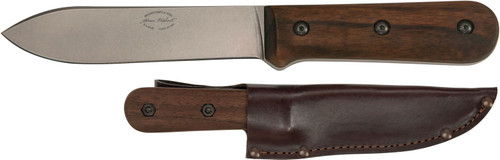
KA-BAR also became a premier production partner for respected custom and tactical knife designers. Its partnership with outdoorsman Ethan Becker brought the Becker Knife & Tool (BK&T) line to wide availability, featuring heavy 1095 Cro-Van full-tang blades with contoured Ultramid handles - including the rugged Becker Campanion (BK2), the chisel-tip Becker Tac Tool (BK3), the Becker Combat Utility (BK7), the 9.25-inch Becker Combat Bowie (BK9), the compact Becker Short Drop Point (BK16), and the walnut-handled Becker Kephart (BK62). For defensive carry, KA-BAR teamed with Tactical Defense Institute founder John Benner to develop the angled-grip TDI Law Enforcement knife (including the Large TDI 1482 and ultra-compact Last Ditch Knife 1478BP), while preserving wartime heritage through the double-edged EK44 Ek Model 4 commando dagger and collaborating with custom makers on blades like the Jarosz Turok Fixed Blade.
Market Position & Key Peers
Among hard-use fixed-blade and tactical cutlery brands stocked at Global Ordnance, KA-BAR stands alongside Cold Steel, Spyderco, Kershaw, SOG, and CRKT. Whereas Spyderco and Kershaw emphasize modern everyday-carry folding knives with stainless super-steels, KA-BAR remains the American reference point for proven 1095 Cro-Van carbon-steel fixed blades that hold an edge, resist catastrophic snapping under hard camp chores, and can be resharpened rapidly on a pocket stone in the field.
Global Ordnance carries a comprehensive roster of USA-made and specialty KA-BAR blades and field tools. Stocked standouts include the classic USMC Fight/Utility 1217, USMC Short Utility 1252, Short Fight/Utility 1257, 1245 Tanto, Big Brother, Becker Campanion (BK2), Becker Tac Tool (BK3), Becker Combat Utility (BK7), Becker Combat Bowie (BK9), Becker Short Drop Point (BK16), Becker Kephart (BK62), EK44 Ek Model 4, Jarosz Turok, Cutlass Machete, TDI Law Enforcement knives (1482 and 1478BP), and camp accessories like the Ka-Barley Bottle Opener and Lake Effect Ice Scraper.
Featured In-Stock KA-BAR Models at Global Ordnance
Ka-Bar Becker Kephart Fixed Blade Knife - BK62$157.05 Ka-Bar Becker Tac Tool 7" Fixed Blade - BK3$153.22
 Ka-Bar Becker Combat Bowie Fixed Blade - BK9$140.56
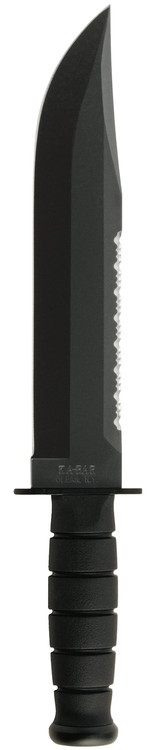 Ka-Bar Big Brother Kraton G Fixed Knife - 2211$127.78
 Ka-Bar EK44 Ek Model 4 Fixed Double-Edge Spear Point Knife - EK44$116.56
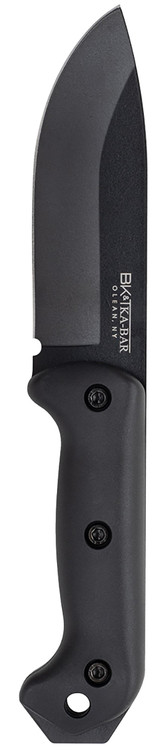 Ka-Bar Becker Campanion Fixed Blade Knife - BK2$109.45
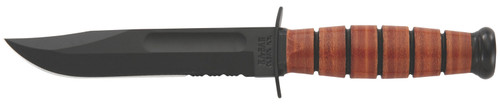 Ka-Bar USMC Short Utility Knife 5.25" Clip-Point / Serrated - 1252$99.98
 Ka-Bar Becker Short Drop Point Fixed Blade - BK16$98.49