
American Precision Arms
-
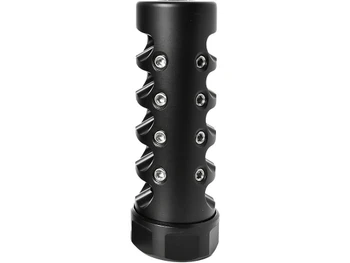
American Precision Arms Gen 4 Fat Bastard Self Timing 5/8"x24 Threads 3.30" OAL 1.10" Diameter 30 Cal
American Precision Arms
$209.54The Gen 4 Fat Bastard’s self‑timing U.R.P. ports give you a brake that actually lets the rifle stay flat after the shot. By shaping the gas flow and the internal manifold, APA has trimmed the...$209.54 -
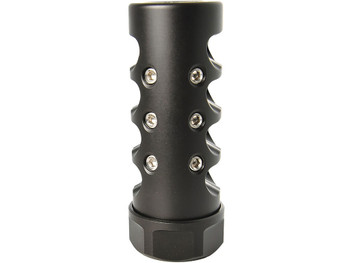
American Precision Arms Gen 4 Little Bastard Self Timing 5/8"x24 Threads 2.70" OAL 1" Diameter 6mm
American Precision Arms
$199.79The Little Bastard’s self‑timing ports are cut to a precise geometry that aligns with the muzzle blast as the bullet exits, so the brake engages at the exact moment needed for maximum recoil...$199.79 -

American Precision Arms Gen 2 Fat Bastard Self Timing Brake Steel with 5/8"-24 tpi Threads, 3.30" OAL 1.115" Diameter for 338 Cal Rifle
American Precision Arms
$180.29The Fat Bastard’s self‑timing brake shaves a noticeable chunk of felt recoil on .338 Lapua Magnum platforms. Its port layout lets the gas pressure act in a timed sequence, so the rifle stays on...$180.29 -
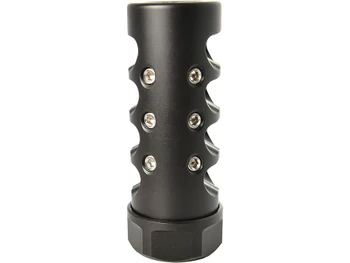
American Precision Arms Gen 4 Little Bastard Self Timing 5/8"x24 Threads 2.70" OAL 1" Diameter 30 Cal
American Precision Arms
$199.79The Little Bastard’s self‑timing jam‑nut means you can bolt the brake on and walk away confident it’s perfectly level—no shims, no guesswork. That level platform is what makes the Gen 4 line the...$199.79 -
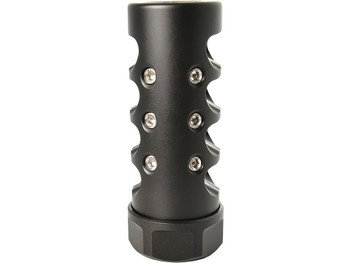
American Precision Arms Gen 4 Little Bastard Self Timing 5/8"x24 Threads 2.70" OAL 1" Diameter 6.5mm
American Precision Arms
$199.79The Little Bastard’s 1‑inch‑diameter, 2.70‑inch overall length makes it one of the smallest muzzle brakes on the market, perfect for shooters who hate a bulky front end. Its self‑timing ports are cut...$199.79 -
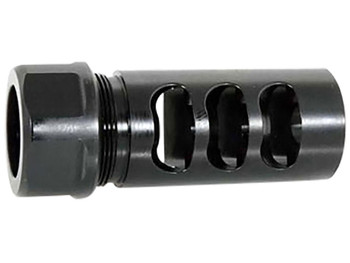
American Precision Arms Gen 2 Little Bastard Self Timing Brake Steel with 5/8"-24 tpi Threads, 2.22" OAL 1" Diameter for 30 Cal Rifle
American Precision Arms
$155.93The Gen 2 Little Bastard’s standout feature is its self‑timing nut—just hand‑tighten the nut and the brake seats perfectly without any hidden washers. That simplicity means you can swap brakes on the...$155.93 -
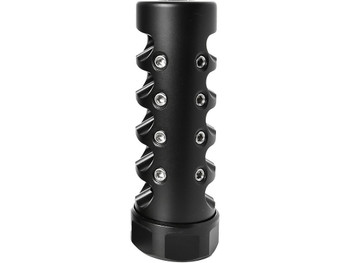
American Precision Arms Gen 4 Fat Bastard Self Timing 5/8"x24 Threads 3.30" OAL 1.10" Diameter 6.5mm
American Precision Arms
$209.54The Gen 4 Fat Bastard’s self‑timing system means the brake drops straight onto the barrel and locks in place without any extra hardware—just thread it on and you’re ready to fire. Its 5/8×24 thread...$209.54 -
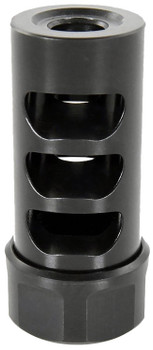
American Precision Arms Gen 2 Micro Bastard Self-Timing Brake - G2M1230N
American Precision Arms
$155.93The self-timing geometry of this brake means you don’t have to chase the gas port - the internal ports line up as soon as the threads engage, giving you a quick, repeatable install on any AR-style...$155.93
Brand Archive · Est. 2000
American Precision Arms: History & Engineering
Born from master gunsmith Jered Joplin's custom precision rifle bench in Georgia, American Precision Arms (APA) grew from a one-man gunsmithing shop into one of the most dominant names in long-range competitive rifle engineering. Tracing its operational roots to Joplin's leadership of Patriot Arms Inc. around 2000 before transitioning under the American Precision Arms banner in Jefferson, Georgia, APA earned worldwide recognition among Precision Rifle Series (PRS), National Rifle League (NRL), and tactical marksmen for solving two classic bolt-action challenges: eliminating the need for a gunsmith to install a precision muzzle brake, and keeping the rifle's sight picture rock-steady through recoil so shooters can spot their own bullet impacts downrange.
Origins, Jered Joplin & The Jefferson, Georgia Shop
Before the American Precision Arms name became a fixture on PRS firing lines across the country, founder Jered Joplin built his reputation as a meticulous custom bolt-action gunsmith, taking over Patriot Arms Inc. around 2000 and turning out match-grade tactical and hunting rifles for serious marksmen and military competitors. Working out of Jefferson, Georgia, Joplin spent countless hours machining custom actions, chambering match barrels, and testing how gas redirection at the muzzle affected both felt recoil and shooter sight-picture retention.
As Patriot Arms evolved into American Precision Arms in the late 2000s, Joplin invested heavily in multi-axis CNC machining centers so APA could build its own precision components in-house rather than relying on outside job shops. That vertical integration allowed APA to pair bespoke custom rifles - built to exacting concentricity tolerances - with proprietary muzzle devices, bottom metal, scope rings, and rifle accessories engineered specifically for high-round-count competition and backcountry hunting.
The Bastard Series & Self-Timing Engineering
APA's most influential contribution to modern precision shooting is the Bastard line of self-timing muzzle brakes, anchored by the Little Bastard, Fat Bastard, and Micro Bastard. Historically, installing an efficient baffled rifle brake required sending a barrel to a gunsmith to machine a crush shoulder or stack thin peel washers until the side ports sat perfectly horizontal. APA solved that problem with an integrated, left-hand-threaded locking collar (lock nut) mated to the brake body: shooters simply thread the brake onto standard 5/8x24 or 1/2x28 muzzle threads, align the ports level by eye, and tighten the opposing locking nut with a standard wrench for repeatable, rock-solid timing in under a minute.
Across successive generations - from the battle-proven Gen 2 Little Bastard, Gen 2 Fat Bastard, and compact Gen 2 Micro Bastard to the flagship Gen 4 Little Bastard and Gen 4 Fat Bastard - APA refined both gas porting and shooter tuneability. While the Gen 2 brakes set the standard for compact recoil reduction on 6mm, 6.5mm, .30-caliber, and .338 Lapua Magnum rifles, the Gen 4 Little Bastard and Gen 4 Fat Bastard add top-mounted tunable gas ports (using adjustable set screws) along with revised internal baffle geometry that lets competitors dial out vertical muzzle hop and rotational torque to match their exact cartridge, rifle weight, and shooting stance.
Market Position, Competitors & Stocked Lineup at Global Ordnance
At long-range steel matches and backcountry hunting camps, American Precision Arms competes directly with premier precision-rifle accessory and chassis innovators stocked at Global Ordnance, including Area 419, MasterPiece Arms, MDT Sporting Goods, Faxon Firearms, Rearden Manufacturing, and SureFire. In PRS competition surveys, APA's Little Bastard and Fat Bastard brakes consistently sit at the top of the field alongside Area 419's Hellfire system because competitors can swap barrels or clean carbon without a lathe or shim kit.
Global Ordnance stocks APA's flagship self-timing brakes across both Gen 2 and Gen 4 architectures in black nitride stainless steel. Shooters can equip sporter and suppressor-profile barrels with the Gen 2 Micro Bastard Self-Timing Brake (1/2x28 .30 cal, G2M1230N), medium and heavy match barrels with the Gen 2 Little Bastard (5/8x24 .30 cal) or Gen 4 Little Bastard (5/8x24 in 6mm, 6.5mm, and .30 cal), and magnum or competition rigs with the Gen 2 Fat Bastard (5/8x24 .338 cal) and Gen 4 Fat Bastard (5/8x24 in 6.5mm and .30 cal).