
About Sturm, Ruger & Co.
American Investment-Casting Innovator
About Sturm, Ruger & Co.: History, Engineering & Legacy
Founded in 1949, Sturm, Ruger & Co. reshaped American firearms manufacturing through precision investment casting across the 10/22, Mark IV, GP100, and American Rifle lines.

Sturm, Ruger & Co. began in a rented machine shop in Southport, Connecticut, in 1949 when engineer William B. Ruger partnered with financier Alexander McCormick Sturm to produce an affordable, accurate .22 LR semi-automatic pistol. Starting with $50,000 in capital, Bill Ruger transformed postwar American gunmaking by pairing clean mechanical design with Pine Tree Castings, the company's proprietary lost-wax investment casting foundry in Newport, New Hampshire. Over seven decades later, Ruger operates major manufacturing plants in Newport, New Hampshire; Prescott, Arizona; and Mayodan, North Carolina, supplying rimfire rifles, double-action and single-action revolvers, concealed-carry pistols, bolt-action rifles, and Ruger-made Marlin lever-actions across North America.
Origins, Founder & Early Milestones
William Batterman Ruger was a self-taught mechanical designer who sketched firearms concepts as a teenager and worked at Springfield Armory during the late 1930s before launching his own tool business. In 1949, Ruger drew inspiration from two captured Japanese Nambu pistols and the Luger P08 grip angle to engineer a tubular-receiver .22 LR target pistol built from inexpensive stamped steel parts rather than costly milled forgings. Alexander Sturm contributed $50,000 and designed the iconic red eagle crest. Priced at $37.50, the Ruger Standard pistol earned an immediate review from Julian Hatcher in The American Rifleman and generated thousands of prepaid orders before production even scaled up.
Tragically, Alexander Sturm died of viral hepatitis in November 1951 at age 28, after which Bill Ruger changed the eagle emblem from red to black in tribute to his partner. Capitalizing on the 1950s television Western boom, Ruger introduced the Single-Six rimfire revolver in 1953 and the Blackhawk centerfire revolver in 1955, replacing fragile flat leaf springs with durable coil springs and investment-cast frames. By 1964, Ruger unveiled the 10/22 carbine with its flush-fitting 10-round rotary magazine, a rimfire design that went on to surpass seven million units produced and anchor an entire aftermarket industry alongside Magpul and Volquartsen.
Landmark Platforms & Engineering Breakthroughs
Ruger's defining industrial advantage came from mastering lost-wax investment casting at its Pine Tree Castings division in Newport, New Hampshire. By casting complex steel receiver and frame geometries near final dimensions, Ruger eliminated dozens of milling passes while producing receivers thick enough to handle high-pressure magnum loads like .357 Magnum, .44 Magnum, and .454 Casull. That strength underpinned the double-action Security-Six, GP100, Redhawk, and Super Redhawk revolvers, all featuring Ruger's patented transfer-bar ignition safety and modular trigger-guard subassemblies that strip without specialized gunsmithing tools.
On the rifle side, the Mini-14 brought Garand-style rotating-bolt reliability to .223 Remington and 5.56 NATO, while the Ruger Precision Rifle democratized long-range chassis shooting in 6.5 Creedmoor and .308 Winchester starting in 2015. In 2016, the Mark IV pistol solved the notoriously complex takedown of earlier Mark-series pistols with a single-button hinged receiver. Ruger also expanded aggressively into concealed carry with the LCP in .380 ACP, the Max-9 in 9mm Luger, and the lightweight LCR revolver in .38 Special. In November 2020, Ruger acquired Marlin Firearms' assets and restarted lever-action production in Mayodan, North Carolina, building Model 1895 and 336 rifles in .45-70 Government and .30-30 Winchester.
Industry Position, Competitors & Modern Lineup at Global Ordnance
As one of the largest publicly traded firearms manufacturers in the United States, Sturm, Ruger & Co. competes directly across almost every civilian category. In double-action revolvers, Ruger's GP100 and SP101 square off against Smith & Wesson and Colt; in polymer defensive pistols, the RXM, Security-9, and Max-9 contend with Glock, SIG Sauer, and Springfield Armory; and in value-focused centerfire rifles, the Ruger American Rifle Gen II rivals Savage Arms and Tikka. Meanwhile, Ruger's Mayodan-built Marlin lever guns now compete head-to-head with Henry Repeating Arms and Winchester Repeating Arms.
At Global Ordnance, shooters frequently pair Ruger 10/22 rifles and Mark IV pistols with Federal Ammunition and CCI rimfire loads, outfit Ruger American Gen II and Precision rifles with Burris or Holosun optics and Hornady 6.5 Creedmoor match ammunition, and equip Ruger defensive handguns with Streamlight weapon lights and Galco or DeSantis holsters. Threaded models like the 10/22 Tactical, Mark IV 22/45 Lite, and Ruger American Ranch also serve as favorite suppressor hosts for Dead Air and SilencerCo cans.
Featured In-Stock Sturm, Ruger & Co. Products at Global Ordnance
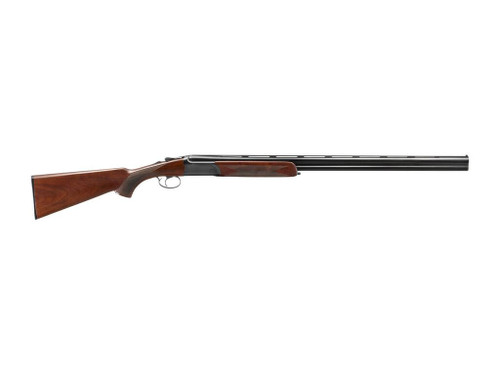 Ruger 4511 Red Label III 20 Gauge Break Open 3" 2rd 30" Blued Over/Under Vent Rib Barrel, Blue Polished Alloy Steel Receiver, Fixed Walnut Stock$2,528.85
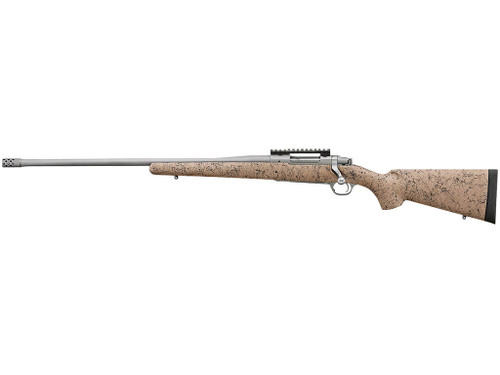 Ruger 57163 Hawkeye FTW Hunter Full Size 6.5 PRC 4+1 24" Matte Stainless Threaded Barrel, Picatinny Rail Stainless Steel Receiver, Speckled Tan/Black HS Precision Synthetic Stock, Left Hand$1,606.55
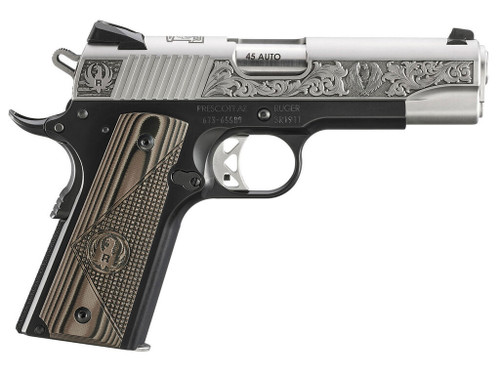 RUG 16703 PRSCOT AZ 45 STREET EDTN 7R BRN/BLK/DLX$1,436.35
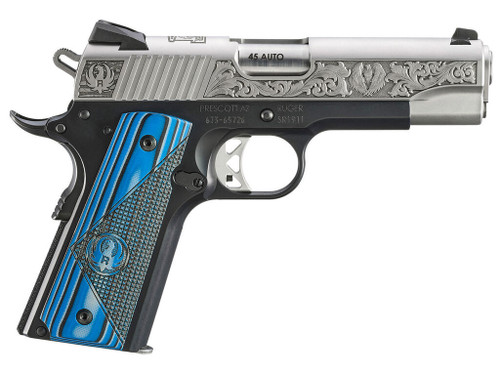 RUG 16702 NWPORT NH 45 STREET EDTN 7R BLU/BLK/DLX$1,436.35