
About Winchester Repeating Arms
American Repeating Firearms Pioneer
About Winchester Repeating Arms: History, Engineering & Legacy
From Oliver Winchester's 1866 lever-action and John Moses Browning's Model 1894 to the Model 70 bolt-action and SX4 shotgun, defining American sporting arms.
Founded in 1866 by businessman Oliver Fisher Winchester in New Haven, Connecticut, Winchester Repeating Arms transformed American firearms manufacturing by pairing rapid-fire tubular-magazine lever actions with industrialized interchangeable parts. Building on Benjamin Tyler Henry's 1860 repeater and Nelson King's side-loading gate patent, Winchester established the benchmark for frontier rifles before partnering with John Moses Browning to produce the Model 1886, Model 1892, Model 1894, and Model 1897 pump shotgun. Today, licensed by Olin Corporation and operated under the Herstal Group alongside Browning and FN Herstal from headquarters in Morgan, Utah, Winchester delivers precision bolt-action hunting rifles, fast-cycling waterfowl shotguns, and heritage lever guns.
Origins, Founder & Early Milestones
Winchester Repeating Arms grew out of the Volcanic Repeating Arms Company and the New Haven Arms Company, where shirt manufacturer Oliver Winchester gained controlling interest in 1857. Plant superintendent Benjamin Tyler Henry refined the lever-action toggle-link mechanism into the brass-framed 1860 Henry rifle, proving the military and frontier value of high-capacity metallic-cartridge repeaters. In 1866, Oliver Winchester reorganized the enterprise as the Winchester Repeating Arms Company and introduced the Model 1866, nicknamed the Yellow Boy, which integrated Nelson King's spring-loaded side gate so shooters could top off the tubular magazine quickly without exposing the magazine spring to dirt. Seven years later, the iron-framed Model 1873 chambered in .44-40 Winchester earned lasting fame alongside Colt single-action revolvers by letting western riders carry one cartridge for both rifle and sidearm.
A decisive technical turning point arrived in 1883 when Winchester vice president Thomas Gray Bennett traveled to Ogden, Utah to purchase designs from a young gunsmith named John Moses Browning. Over the next two decades, Winchester bought dozens of Browning patents, launching the Model 1885 single-shot, the strong locking-lug Model 1886 in .45-70 Government, the compact Model 1892, and the smokeless-powder Model 1894 chambered in .30-30 Winchester. During World War I and World War II, the New Haven plant expanded dramatically, producing M1917 Enfield rifles, Browning Automatic Rifles, M1 Garands, and the M1 Carbine in .30 Carbine, cementing Winchester's place in both American industrial history and military ordnance.
Landmark Platforms & Engineering Breakthroughs
Beyond lever-action rifles, Winchester engineered several of the twentieth century's most respected sporting platforms. Introduced in 1936 as an evolution of the Model 54, the Model 70 earned the title of The Rifleman's Rifle through its controlled-round-feed Mauser-style claw extractor, three-position wing safety that blocked the firing pin directly, and crisp adjustable trigger. Chambered in classic cartridges such as .270 Winchester, .30-06 Springfield, and .300 Win Mag, pre-1964 Model 70 rifles set a lasting standard for North American big-game and dangerous-game hunting rifles. After the Herstal Group acquired U.S. Repeating Arms in 1989 and consolidated production following the 2006 New Haven plant closure, engineers restored controlled-round feeding and introduced the enclosed M.O.A. Trigger System with a clean zero-creep break.
In smoothbore design, Winchester moved from John Browning's exposed-hammer Model 1897 and the hammerless Model 12 pump shotgun into high-speed modern waterfowl and upland guns. The Super X4 (SX4) semi-automatic utilizes the Active Valve gas system originally developed with Browning, automatically metering propellant gases to cycle everything from light target loads to heavy 3.5-inch magnum 12 Gauge and 20 Gauge waterfowl shells with reduced felt recoil. Meanwhile, the Super X Pump (SXP) combines a four-lug rotary bolt with an inertia-assisted slide mechanism that starts unlocking the action upon firing for rapid follow-up shots. For hunters seeking accessible bolt-action accuracy, the XPR pairs a chromoly steel receiver with a button-rifled free-floated barrel and a detachable polymer box magazine.
Industry Position, Competitors & Modern Lineup at Global Ordnance
Operating under license from Olin Corporation, which continues to manufacture Winchester Ammunition separately in East Alton, Illinois and Oxford, Mississippi, Winchester Repeating Arms manages a global manufacturing footprint coordinated from Morgan, Utah. Heritage lever-action models such as the 1873, 1886, 1892, and 1894 are crafted in Japan by Miroku, while modern Model 70, XPR, and SX4 platforms leverage European production at the Herstal Group facility in Viana do Castelo, Portugal, and SXP shotguns are built to Winchester specifications by partner plants in Turkey. In the commercial marketplace, Winchester competes directly with Henry Repeating Arms in lever guns, Mossberg and Beretta in sporting and waterfowl shotguns, and Ruger and Savage Arms in centerfire bolt-action hunting rifles.
At Global Ordnance, shooters and hunters can browse an active lineup of Winchester Repeating Arms rifles and shotguns spanning deer timber, waterfowl marshes, clay fields, and rimfire ranges. Stocked platforms routinely include Model 70 Featherweight and Extreme Weather rifles in .308 Winchester and 6.5 Creedmoor, budget-minded XPR bolt actions, fast-handling SX4 semi-automatics, SXP Defender and waterfowl pumps in 12 Gauge and 20 Gauge, and rimfire Wildcat and Xpert .22 LR rifles. Shooters can pair their Winchester long guns with matching Winchester Ammunition, Federal Premium, or Hornady loads, along with Talley rings and Warne mounts, all backed by fast fulfillment from our Sarasota, Florida team.
Featured In-Stock Winchester Repeating Arms Products at Global Ordnance
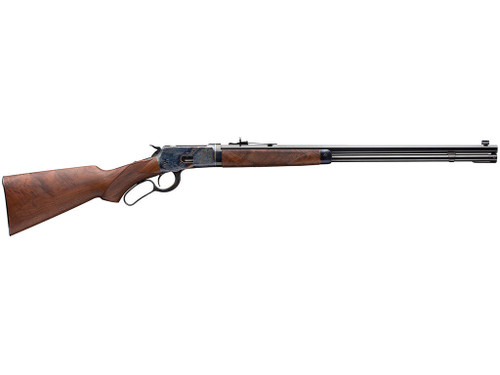 Winchester Repeating Arms 534283140 Model 1892 Deluxe Takedown Full Size 44-40 Win 11+1 24" Polished Blued Octagon Barrel, Color Case Hardened Steel Receiver, Grade V/VI Walnut Fixed Stock$2,164.90
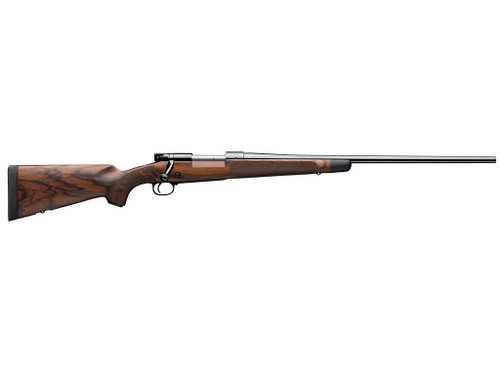 Winchester Repeating Arms 535239294 Model 70 Super Grade 6.5 PRC Caliber with 3+1 Capacity, 24" Barrel, Polished Blued Metal Finish, AAA French Walnut Stock & No Sights Right Hand (Full Size)$2,005.29
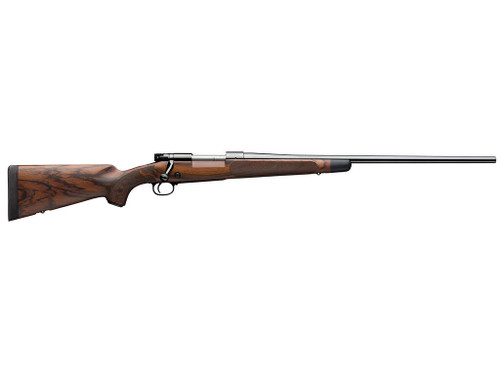 Winchester Repeating Arms 535239230 Model 70 Super Grade 7mm Rem Mag Caliber with 3+1 Capacity, 26" Barrel, Polished Blued Metal Finish, AAA French Walnut Stock & No Sights Right Hand (Full Size)$2,005.29
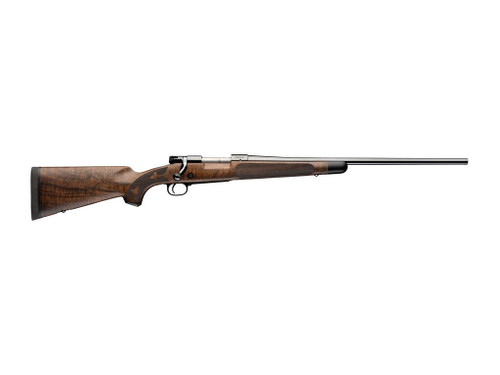 Winchester Repeating Arms 535248289 Model 70 Super Grade 6.5 Creedmoor 4+1 22" Blue Polished Target Crown Barrel, Blue Polished Steel Drilled & Tapped Receiver, Gloss AAA Claro Walnut Fixed Stock, Rig$2,005.29