

Magpul
-
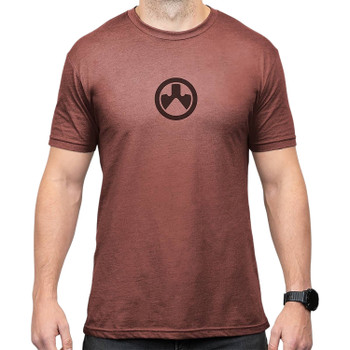
Magpul Icon Logo CVC T-Shirt - MAG1115-613 - XL
Magpul
$11.50The fabric mix of 60% combed ring-spun cotton and 40% polyester gives this tee a light-weight feel while holding up to the wear and tear of range trips. The crew-neck and set-in sleeves keep the...$11.50 -
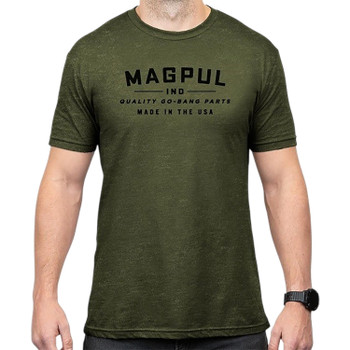
Magpul Go Bang Parts CVC T-Shirt - MAG1112 - XL
Magpul
$28.45The Go Bang Parts tee solves the common problem of a shirt that either shrinks or wears out after a few washes. By using a 60/40 cotton-poly blend, Magpul delivers a fabric that stays soft, resists...$28.45 -
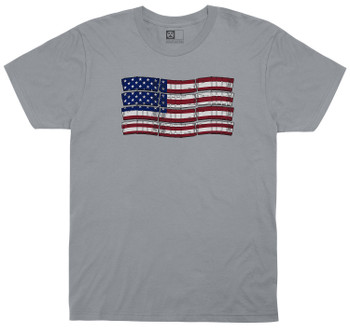
Magpul American Flag Short Sleeve T-Shirt - MAG1180-010
Magpul
$11.50The American Flag tee’s crewneck cut and short-sleeve design make it a go-to shirt for a day at the range or a casual outing. The flag graphic spans the chest, giving a clean, patriotic look that’s...$11.50 -
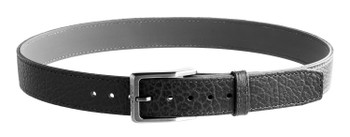
MAGPUL Industries Corp Tejas EL Cibolo Gun Belt - Black Bison Hide 46" 1.50" Wide - MAG127900146
Magpul
$113.95The El Cibolo belt’s strength comes from its three-ply build: a solid 100% American bison hide strap forms the outer layer, delivering a rugged grain and natural durability that outlasts standard...$113.95 -
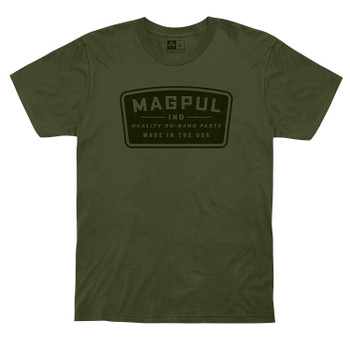
Magpul Go Bang Parts Olive Drab Cotton Short Sleeve Small - MAG1111316S
Magpul
$11.50The Go Bang Parts tee solves the common annoyance of itchy tags - the interior neck label is printed right onto the fabric, so you never feel a scratchy tag digging into your skin. The crew-neck cut...$11.50 -

MAGPUL Tejas EL Cibolo Gun Belt - Chocolate Brown 44" - MAG127921044
Magpul
$113.95The Tejas El Cibolo belt starts with a solid, one-piece strap of 100% American bison hide. That base hide is naturally tough, resisting tears and abrasion while feeling supple against the skin...$113.95 -

MAGPUL Tejas EL Cibolo Gun Belt - Chocolate Brown Bison Hide 46" - MAG127923046
Magpul
$113.95The Tejas EL Cibolo belt tackles the everyday problem of belt sag when a pistol is holstered. Its three-layer build-bison hide outer skin, bull hide reinforcement, and a flexible polymer...$113.95 -

MAGPUL Tejas EL Cibolo Gun Belt - Chocolate Brown Bison Hide - MAG127921042
Magpul
$113.95The Tejas EL Cibolo belt’s three-ply construction starts with a solid strap of 100% American bison hide. That outer layer is backed by a reinforcing layer of North American bull hide, then capped...$113.95 -
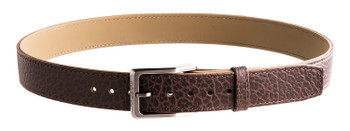
MAGPUL Tejas EL Cibolo Belt Chocolate Brown 32" × 1.50" - MAG127900132
Magpul
$113.95The Tejas EL Cibolo belt solves the everyday problem of a flimsy, synthetic carrier that can’t stand up to the rigors of a day on the range. Its 32-inch length and 1.50-inch width give you a solid...$113.95 -
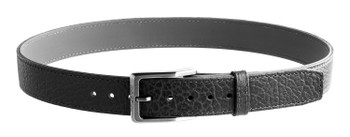
Magpul Tejas EL Cibolo Black Bison Hide Gun Belt - MAG127623032
Magpul
$113.95The Tejas EL Cibolo belt solves the everyday carry problem of a sturdy yet comfortable strap that won’t sag under a pistol’s weight. Its 3-ply construction-bison hide outer, bull-hide reinforcement,...$113.95 -

Magpul Tejas EL Pistolero Light Brown Bull Hide Belt - MAG127623046
Magpul
$109.20The El Pistolero’s standout is its single-piece 100% bull hide strap-no seams, no weak points. That solid leather base gives a firm, reliable platform that won’t stretch or deform under the weight of...$109.20 -
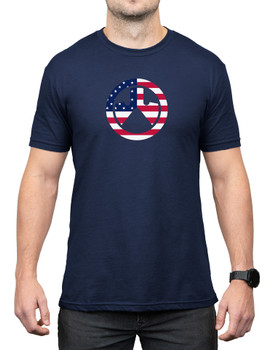
Magpul Independence Icon Navy Short Sleeve Small - MAG1281410S
Magpul
$13.67Magpul’s Independence Icon tee isn’t just a casual shirt-it’s engineered for the active shooter’s lifestyle. The 100% combed ring-spun cotton/polyester fabric holds its shape and softness even after...$13.67 -
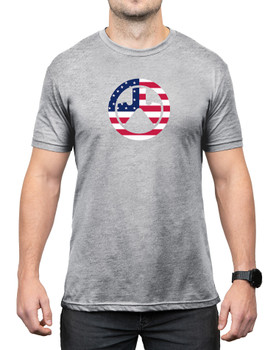
MAGPUL Industries Corp Independence Icon T-Shirt Athletic Gray Heather Small - MAG1281030S
Magpul
$13.67The Independence Icon T-shirt delivers everyday comfort with a clean, patriotic graphic. Soft combed ring-spun cotton blended with polyester gives a lightweight feel that holds up to regular wear,...$13.67 -
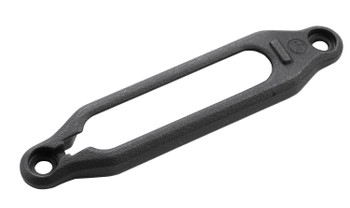
Magpul MAG631-BLK Insight PEQ Tape Switch Mount Plate - MAG631BLK
Magpul
$14.20The M-LOK Tape Switch Mounting Plate gives you a dedicated spot for Insight PEQ pressure-pad switches on any M-LOK rail. Its polymer body is molded to the same standards as Magpul’s other rail...$14.20 -
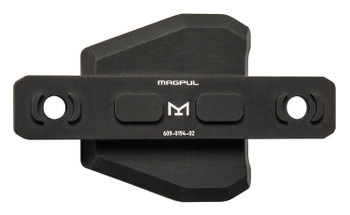
Magpul Industries M-LOK Tripod Adapter - MAG624BLK
Magpul
$47.45When you need a reliable spot to bolt a tripod onto a rifle with a M-LOK handguard, this adapter slides right into the slot and gives you a flat, sturdy surface. The 1.8-inch by 3.1-inch aluminum...$47.45
Brand Archive · Est. 1999
Magpul Industries: History & Engineering
Founded in 1999 by former U.S. Marine Corps Force Recon sergeant Richard Fitzpatrick, Magpul Industries grew from a single rubberized magazine-extraction loop into the defining polymer accessories manufacturer of modern small arms. Headquartered in Austin, Texas with high-volume injection-molding facilities in Cheyenne, Wyoming, the company reshaped military and commercial rifle ergonomics through its PMAG magazine family, MOE and CTR stocks, MBUS backup iron sights, and the open-licensed M-LOK negative-space attachment interface. Today, Magpul magazines and furniture serve across U.S. military units, law enforcement agencies, and civilian shooters running AR-15, AR-10, AK, Glock, and bolt-action rifle platforms.
Origins & Early Milestones
Magpul began in 1999 in Colorado when Richard Fitzpatrick addressed a practical infantry problem he experienced in Force Recon: extracting aluminum STANAG magazines quickly from tight nylon chest pouches under stress. His first invention, the Original Magpul, was a simple synthetic thermoplastic loop slipped over the baseplate of a 5.56 NATO magazine, replacing field-expedient paracord and duct tape pulls. Demand from military units and competitive shooters funded rapid engineering expansion into self-leveling anti-tilt magazine followers, ergonomic MIAD and MOE pistol grips, and the M93 collapsible stock, which introduced friction-locked stability and consistent cheek weld to carbine buffer tubes.
In 2006, Fitzpatrick and his engineering team designed the Masada adaptive combat rifle prototype in Boulder and Erie, Colorado, later licensed to Bushmaster and Remington as the Adaptive Combat Rifle (ACR). Although the Masada drew intense attention at SHOT Show 2007, the polymer magazine developed alongside that rifle became the company's defining commercial breakthrough. When Colorado enacted strict magazine-capacity restrictions in 2013, Magpul executed a historic two-state relocation completed in 2014, shifting corporate leadership to Austin, Texas and establishing massive automated molding and logistics plants in Cheyenne, Wyoming to protect unconstrained domestic production.
Landmark Platforms
Introduced in 2007, the PMAG 30 transformed 5.56 NATO and .223 Remington feeding reliability by replacing fragile bent aluminum feed lips with impact-modified nylon polymer, constant-curve internal geometry, a four-way anti-tilt follower, and a stainless steel USGI-spec spring. Iterative refinement yielded the PMAG GEN M3 in 2012, adding an over-insertion stop, slimmer floorplate, and improved cold-weather drop durability across .300 Blackout, 7.62x39mm, and .308 Winchester SR25/M110 patterns. In December 2016, after exhaustive dust, mud, and full-auto testing on M4, M16, and M27 IAR rifles, the U.S. Marine Corps officially adopted the PMAG 30 GEN M3 Window as its primary combat magazine.
Equally consequential was the 2014 launch of M-LOK (Modular Lock), an open-source, free-licensed negative-space mounting standard engineered for both aluminum handguards and injection-molded polymer forends. Unlike round-slot systems that depended on thin chamfered metal edges, M-LOK employed cammed T-nuts seated against thick rectangular slots. In 2017, comparative drop, endurance, and return-to-zero testing at Naval Surface Warfare Center Crane (NSWC Crane) showed M-LOK significantly outperforming KeyMod, prompting United States Special Operations Command (USSOCOM) adoption across next-generation carbines. Magpul extended its polymer expertise into Hunter and Pro 700 rifle stocks for Remington 700, Ruger 10/22, and Mossberg 500/590 shotguns, plus GL9 magazines for Glock 9mm Luger pistols.
Market Position & Key Peers
Within the firearm accessories sector, Magpul occupies the benchmark tier for high-volume polymer engineering, competing alongside Mec-Gar in steel handgun magazines, ProMag in aftermarket feeding devices, Hogue in overmolded stocks and grips, and Midwest Industries or Radian Weapons in billet aluminum handguards and charging handles. Because M-LOK is royalty-free for approved partners, nearly every major rifle builder, from Daniel Defense and FN to Springfield Armory and Smith & Wesson, now ships factory carbines configured around Magpul stocks, grips, MBUS 3 sights, and M-LOK slots.
At Global Ordnance, shooters can outfit carbines, precision bolt guns, defensive shotguns, and pistols across more than 500 in-stock Magpul SKUs. Inventory spans PMAG GEN M2 and GEN M3 magazines in 5.56 NATO, .300 Blackout, 7.62x39mm, .308 Winchester, and 9mm Luger, alongside D-60 drums, MOE SL and CTR buttstocks, MS1 and MS4 QD slings, bipods, and M-LOK rail mounts for SureFire and Streamlight weapon lights. Whether upgrading a hunting rifle in 6.5 Creedmoor or stocking range magazines for defensive training, Magpul components deliver consistent dimensional tolerances and field serviceability.