
Kent Cartridge
-
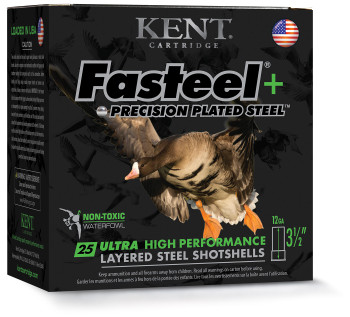
Kent K1235FSP422X4 FSTSTL 12 Gauge 3.5" 2×4 Steel Shot - K1235FSP422X4
Kent Cartridge
$38.70Kent’s K1235FSP422X4 steel-shot shells pack a 2-by-4 shot pattern into a 3.5-inch, 12-gauge case. The blend of steel pellets offers reliable expansion and a clean break, making it a solid choice for...$38.70 -
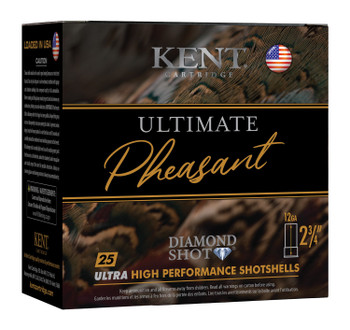
Kent Cartridge Ultimate Pheasant 12 Gauge Birdshot - K12UPH404X6
Kent Cartridge
$26.59Kent’s Ultimate Pheasant load pairs a 1-3/8 oz payload with a 4-6 layered birdshot pattern. The 2.75-in. high-brass hull holds a generous amount of shot while keeping the overall shell length at the...$26.59 -
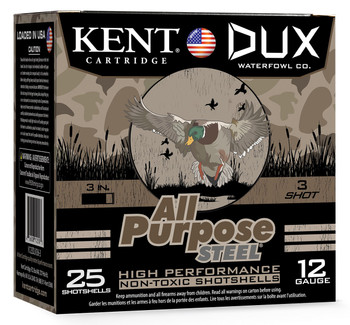
Kent Cartridge DUX WTFL 12 Gauge Steel Shotshells - CC123DUX363
Kent Cartridge
$96.23Kent’s DUX WTFL line is built for waterfowl hunters who need reliable steel-shot performance. The 12-gauge shells are loaded to a standard pressure level and fire a 1,425 fps velocity, giving a solid...$96.23 -
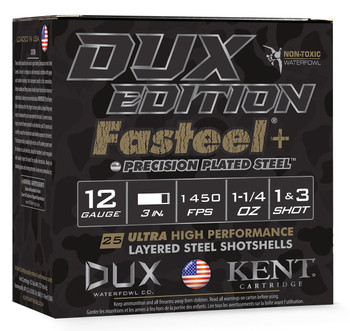
Kent DUX WTFL 12 Gauge Steel Shot 3" 1-1/4 oz - CC123FSPD361X3
Kent Cartridge
$118.85The DUX WTFL shell packs a 3-inch, 1-1/4 oz case that fits short-action 12 ga shotguns without sacrificing payload. At 12 gr steel shot per round, it offers the penetration needed for waterfowl while...$118.85 -
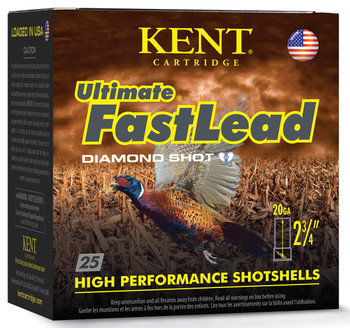
Kent Ultimate Fast Lead 20 Gauge #7.5 Shot - 25 rd/Box - K20UFLHV287.5
Kent Cartridge
$21.47If you need a dependable, fast-loading 20-gauge round for the range, Kent’s Ultimate Fast Lead does the job without fuss. The #7.5 lead shot sits in a 1 oz (2-3/4") column, giving you a solid pattern...$21.47 -
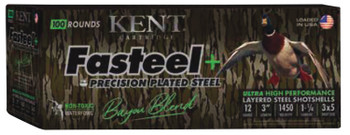
Kent Cartridge Fasteel+ Precision Steel 12 Gauge 3" #3/#5 1-1/4 oz 100 rd Box - CC123FSP363X5
Kent Cartridge
$237.72What matters most in a waterfowl load is the balance between pellet size and velocity. Kent’s Fasteel+ blends #3 and #5 steel shot, giving you the punch of a larger pellet while the smaller ones fill...$237.72 -
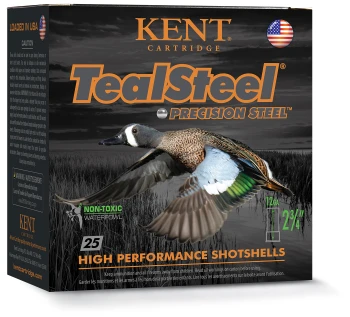
Kent TealSteel 12 Gauge #6 Shot 2.75" 25-Shell Box - KTS12366
Kent Cartridge
$22.31Kent’s TealSteel 12 Gauge shells pair a 2 ¾-inch brass-free hull with #6 precision steel shot, delivering a 1 ¼ oz payload at 1,300 fps. The steel shot is non-toxic, meeting waterfowl hunting...$22.31 -
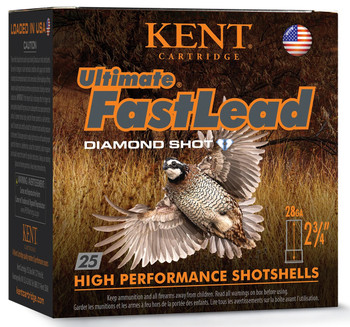
Kent Cartridge Ultimate FastLead Upland Shotshell 28 Gauge 2-3/4″ 7/8 oz #6 - K28UFL246
Kent Cartridge
$23.16Upland hunters and target shooters alike appreciate a fast, consistent pattern, and Kent’s Ultimate FastLead delivers just that. The 2 3/4" shell holds a 7/8 oz payload of #6 lead shot, propelling it...$23.16 -
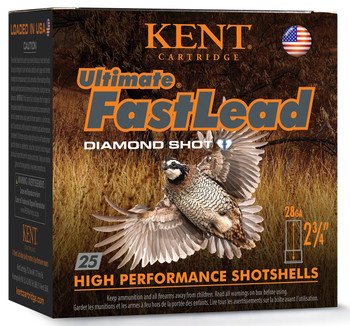
Kent Cartridge Ultimate FastLead 28-Gauge 7.5 Shot - K28UFL247.5
Kent Cartridge
$23.16These 28-gauge Ultimate FastLead shells are built around a 7⁄8 oz lead payload and a 7.5-shot size, delivering a dense, uniform pattern that’s perfect for upland game and general-purpose shooting...$23.16 -
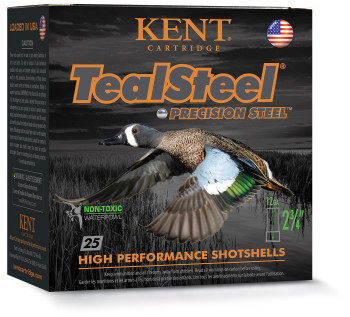
Kent Teal Steel Shotshells 12 Gauge #5 2.75" 1-1/4 oz - KTS12365
Kent Cartridge
$22.31Steel shot in a 12-gauge shell is a go-to for hunters who need a non-toxic option without sacrificing performance. Kent’s Teal Steel shotshells pack a #5 steel load, 1-1/4 oz payload, and a muzzle...$22.31 -

KENT K4103UFL197.5 ULT FL 410 11/16 7.5 25/8
Kent Cartridge
$22.36These .410 FastLead upland shells pack a 3‑inch brass case with a generous 11/16 oz of #7.5 birdshot. The payload size gives a tight, dense pattern that holds up well at the 30‑ to 40‑yard distances...$22.36 -
Kent Cartridge KTS123365 TealSteel Precision Steel 12Gauge 3" 1 1/4oz 5Shot 25 Per Box/10 Case
Kent Cartridge
$22.31Kent’s TealSteel was engineered for the unique demands of teal hunting. The 3‑inch, 1 ¼‑ounce load packs a full #5 steel shot charge, delivering a dense, fast‑moving pattern that maximizes hit...$22.31 -

Kent Cartridge Fasteel+ 20 Gauge #2/4 Shotshells - K203FSP282X4
Kent Cartridge
$27.28What matters most in a waterfowl load is pattern density and penetration. Kent’s Fasteel+ packs a full ounce of #2-4 steel shot into a 3-inch, 20-gauge shell, delivering the kinetic energy needed to...$27.28 -
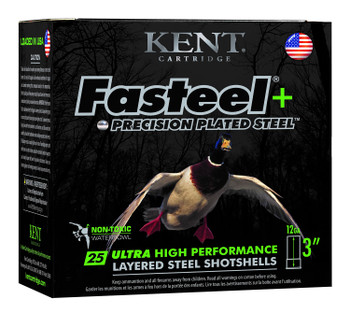
Kent Cartridge Fasteel + 12 Gauge 3" 1 1/4 oz 4x6 Shot - K123FSP364X6
Kent Cartridge
$28.30These Fasteel + shells are built around a 3-inch, 4×6 shot column loaded with 1 1/4 oz of mixed #4 and #6 steel pellets. The blend gives you the punch of #4 shot while the #6 adds pattern density, a...$28.30 -
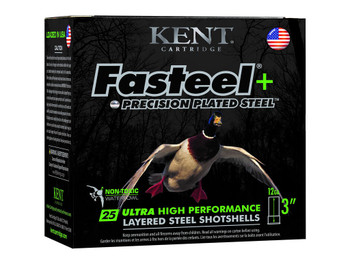
Kent Cartridge K123FSP362X4 Fasteel + 12 Gauge 3" 1 1/4 oz 2/4 Shot 25 Per Box/ 10 Case
Kent Cartridge
$28.30The blend of #2 and #4 steel pellets gives a layered pattern that stays tight longer, a crucial factor when chasing fast‑moving waterfowl. The precision‑plated steel wad holds the shot together...$28.30 -
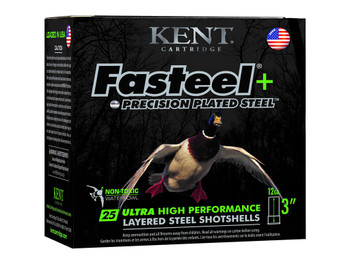
Kent Cartridge K123FSP36BBX2 Fasteel + 12 Gauge 3" 1 1/4 oz BB Shot 25 Per Box/ 10 Case
Kent Cartridge
$28.30Kent’s Fasteel+ 12 Gauge 3" shells are built around a 1 1/4 oz BB steel payload. The steel shot gives a tight, hard‑hitting pattern that waterfowl hunters rely on for clean kills at typical migration...$28.30 -
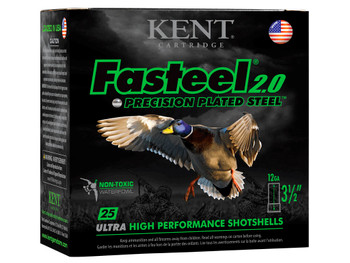
Kent Cartridge K1235FS403 Fasteel 2.0 12 Gauge 3.50" 1 3/8 oz 3 Shot 25 Per Box/ 10 Case
Kent Cartridge
$33.63The 3.5", 1 3⁄8 oz #3 steel shot load hits the target at roughly 1550 fps, giving a tight, energetic pattern that holds up on waterfowl runs. Kent’s Fasteel 2.0 formulation uses corrosion‑resistant,...$33.63 -
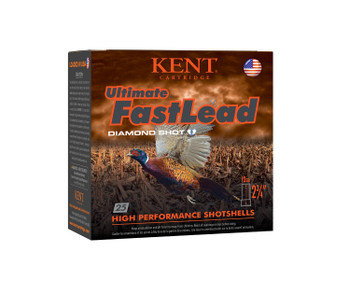
Kent Cartridge Ultimate Fast Lead 12 Gauge 2.75" 1½ oz 4 Shot - K122UFL424
Kent Cartridge
$25.76What matters most in a hunting load is the balance of payload and velocity. Kent’s Ultimate Fast Lead shells cram a 1½ oz #4 birdshot into a 2.75" case, pushing the charge to about 1415 fps. The...$25.76 -
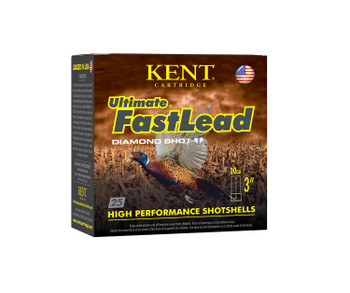
Kent Cartridge Ultimate Fast Lead 20 Gauge 3" #6 Shot - K203UFL366
Kent Cartridge
$26.52Kent’s Ultimate Fast Lead shells pair a 3-inch hull with a proprietary Diamond Shot blend. The polished lead pellets are harder than typical shot, giving you tighter patterns and more knock-down...$26.52 -
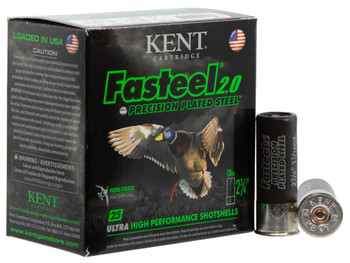
Kent Cartridge K122FS302 Fasteel 2.0 12 Gauge 2.75" 1 1/16 oz 2 Shot 25 Per Box/ 10 Case
Kent Cartridge
$21.56When you’re out on the water or chasing upland birds, you need a shot that holds together and drops on target. Kent’s Fasteel 2.0 loads a 1 1/16 oz charge of #2 steel into a 2.75" shell, delivering...$21.56 -

Kent Cartridge Ultimate Fast Lead 20 Gauge 3" 1-1/4 oz #5 Shot - K203UFL365
Kent Cartridge
$26.52If you’re chasing upland birds, the first thing you notice is the payload: a full 1-1/4 oz of #5 lead shot packed into a 3-inch 20 Gauge shell. That weight, combined with Kent’s Diamond Shot...$26.52 -
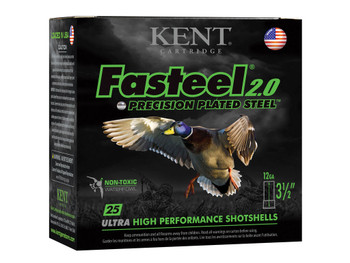
Kent Cartridge K1235FS402 Fasteel 2.0 12 Gauge 3.50" 1 3/8 oz 2 Shot 25 Per Box/ 10 Case
Kent Cartridge
$33.63These Fasteel 2.0 shells are built around a 3.5" nickel‑plated brass case that seats cleanly in any standard 12 Gauge chamber. The case houses a 209 centerfire primer, delivering a dependable spark...$33.63 -
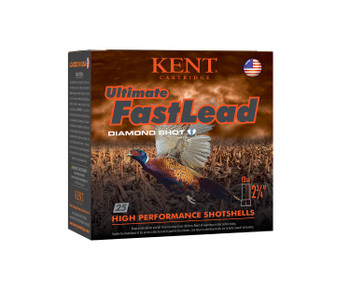
Kent Cartridge Ultimate Fast Lead 12 Gauge #5 Shotshell - K122UFL365
Kent Cartridge
$22.23The 2 ¾-inch, 1 ¼-ounce #5 load is built around Kent’s proprietary Diamond Shot-highly polished lead that holds its shape longer than standard shot, giving you tighter, more uniform patterns when you...$22.23 -
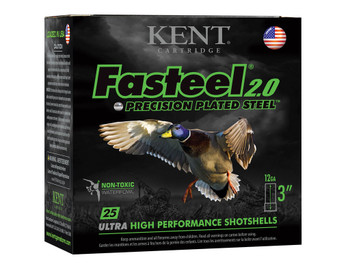
Kent Cartridge K123FS326 Fasteel 2.0 12 Gauge 3" 1 1/8 oz 6 Shot 25 Per Box/ 10 Case
Kent Cartridge
$24.61What matters most in a waterfowl load is pattern density without sacrificing velocity. Kent’s Fasteel 2.0 packs a 3‑inch, 1 1/8 oz case with #6 steel shot that pushes about 1560 fps, giving you a...$24.61 -
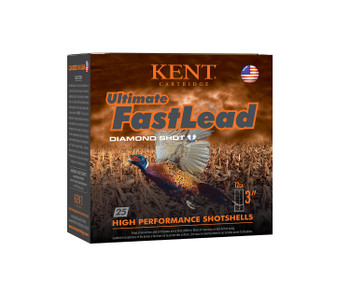
Kent Cartridge Ultimate Fast Lead 12 Gauge 3" #5 Shot - K123UFL505
Kent Cartridge
$30.85The 3-inch, #5 lead shot load packs 48 gr of projectile into a 1 ¾ oz shell, giving a dense, hard-faced pattern that holds together well at medium ranges. Kent’s proprietary Diamond Shot processing...$30.85 -
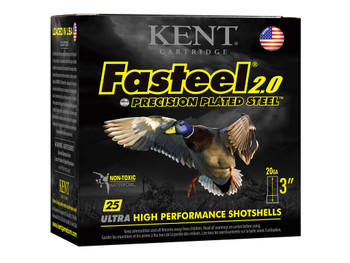
Kent Cartridge K203FS242 Fasteel 2.0 20 Gauge 3" 7/8 oz 2 Shot 25 Per Box/ 10 Case
Kent Cartridge
$24.05When you’re out on a waterfowl hunt, you need a shell that feeds cleanly and shoots a tight pattern. Kent’s Fasteel 2.0 20 Gauge shells pair a 3‑inch case with a 7/8 oz load of #2 steel birdshot,...$24.05 -
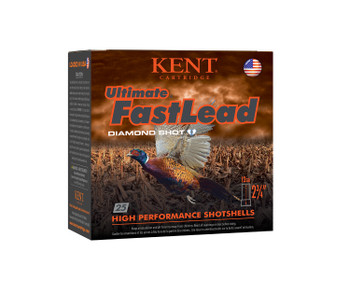
Kent Cartridge Ultimate Fast Lead 12 Gauge 2.75" #5 Shot - K122UFL425
Kent Cartridge
$25.76Ultimate Fast Lead is built around Kent’s proprietary Diamond Shot, a highly polished lead grain that holds its shape better than ordinary shot. The result is a tighter, more uniform pattern-critical...$25.76 -
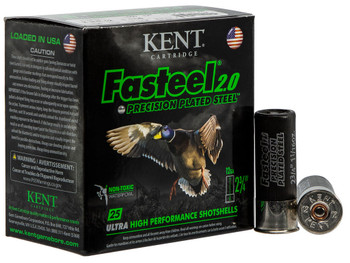
Kent Cartridge K122FS304 Fasteel 2.0 12 Gauge 2.75" 1 1/16 oz 4 Shot 25 Per Box/ 10 Case
Kent Cartridge
$21.56Fasteel 2.0 is Kent’s premium waterfowl load, built around a corrosion‑resistant zinc‑plated steel shot core. The #4 shot size gives a tight, dense pattern that holds up well in the air, while the 1...$21.56 -
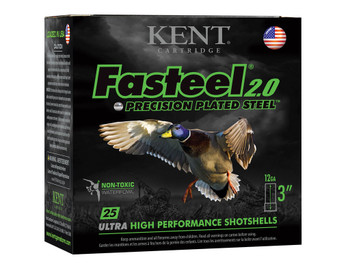
Kent Cartridge K123FS404 Fasteel 2.0 12 Gauge 3" 1 3/8 oz 4 Shot 25 Per Box/ 10 Case
Kent Cartridge
$26.74What matters most in a waterfowl load is a clean, uniform pattern and a non‑toxic shot charge. Kent’s Fasteel 2.0 delivers exactly that with #4 steel pellets encased in a 1 3⁄8 oz payload, shot from...$26.74 -

Kent Cartridge Ultimate Fast Lead 12 Gauge 2.75" 1 1/4 oz #4 Shot - K122UFL364
Kent Cartridge
$22.23The 2.75-inch case holds a hefty 1 1/4 oz of #4 lead shot, a load size usually reserved for larger game. Kent’s Diamond Shot processing gives each pellet a mirror-like finish, so they stay round and...$22.23 -
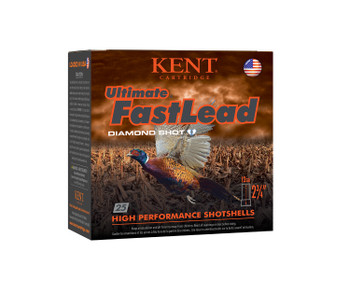
Kent Cartridge Ultimate Fast Lead 12 Gauge 2.75" #5 Shot - K122UFL405
Kent Cartridge
$24.83Kent’s Ultimate Fast Lead load is built around a hefty 1 ⅜ oz of #5 lead shot. The heavy payload, combined with a 1475 fps muzzle velocity, gives you the energy you need to take down wary upland...$24.83 -
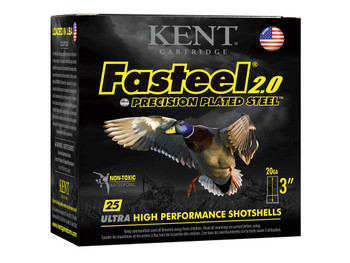
Kent Cartridge K203FS244 Fasteel 2.0 20 Gauge 3" 7/8 oz 4 Shot 25 Per Box/ 10 Case
Kent Cartridge
$24.05These 20 Gauge, 3‑inch shells are built around a high‑performance base wad that feeds cleanly in semi‑automatic shotguns. The 7/8 oz load of #4 steel shot is precision‑plated, giving each pellet a...$24.05 -
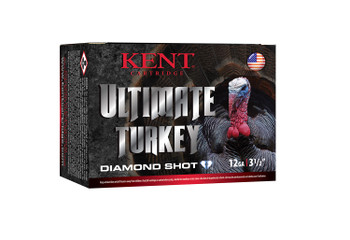
Kent Cartridge Ultimate Turkey 12 Gauge 3.5" #5 Shot - C1235TK635
Kent Cartridge
$15.78When you need a turkey load that sticks, Kent’s Ultimate Turkey shells pair a 2 ¼-oz payload with #5 Diamond Shot. The high-antimony, super-hard pellets stay uniform from the choke to the target,...$15.78 -
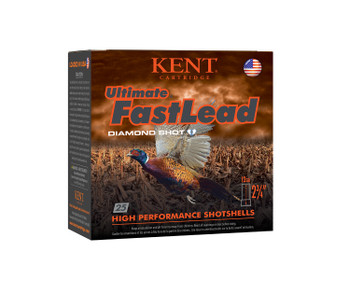
Kent Cartridge Ultimate Fast Lead 12 Gauge 2.75" 1 3/8 oz #4 Shot - K122UFL404
Kent Cartridge
$24.83These Kent Ultimate Fast Lead shells are cut for the 2.75" chamber, the most common length for modern 12 ga shotguns. The 1 3/8 oz load of #4 lead shot gives a tight, dense pattern that holds up well...$24.83 -

Kent Cartridge K123FS323 Fasteel 2.0 12 Gauge 3" 1 1/8 oz 3 Shot 25 Per Box/ 10 Case
Kent Cartridge
$24.61The Fasteel 2.0 combo pairs a 3‑inch, 1 1/8 oz case with #3 steel shot, delivering a high‑velocity 1,560 fps launch that keeps the pattern tight out to typical waterfowl ranges. The steel composition...$24.61 -
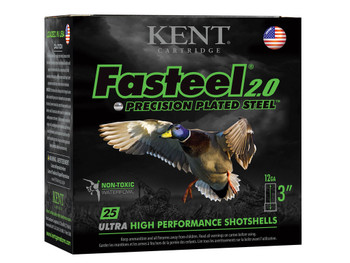
Kent Cartridge K123FS363 Fasteel 2.0 12 Gauge 3" 1 1/4 oz 3 Shot 25 Per Box/ 10 Case
Kent Cartridge
$25.61The load delivers 1 ¼ oz of #3 steel shot in a 3‑inch chamber, the sweet spot for waterfowl where you need a dense, fast‑moving pattern. The steel pellets are precision‑ground and zinc‑plated, which...$25.61 -
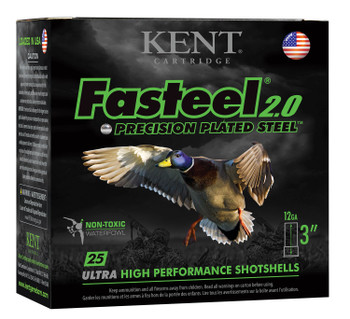
Kent Cartridge Fasteel 2.0 Waterfowl 12 Gauge 3-in 1 1/8 oz #1 Steel Shot - K123FS321
Kent Cartridge
$24.61The Fasteel 2.0 load is built around a precision-plated steel shot core. The zinc-plated #1 steel pellets resist rust and maintain pattern integrity after multiple shots, a real advantage when...$24.61 -
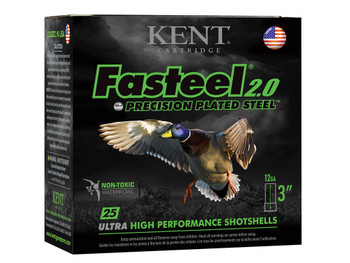
Kent Cartridge K123FS402 Fasteel 2.0 12 Gauge 3" 1 3/8 oz 2 Shot 25 Per Box/ 10 Case
Kent Cartridge
$26.74The Fasteel 2.0 load pairs a 3‑inch, 1 3⁄8 oz case with #2 steel shot, a combo that gives a solid pattern for waterfowl without the environmental concerns of lead. The steel is zinc‑plated to keep...$26.74 -
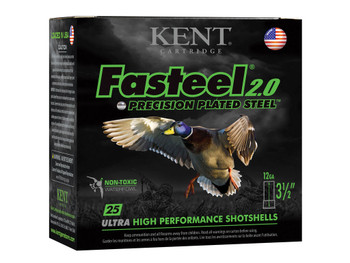
Kent Cartridge K1235FS40BBB Fasteel 2.0 12 Gauge 3.50" 1 3/8 oz BBB Shot 25 Per Box/ 10 Case
Kent Cartridge
$33.63The Fasteel 2.0 loads a hefty 1 3/8 oz of BBB‑size steel shot into a 3.50‑inch, nickel‑plated brass hull. That combination gives a dense, non‑toxic payload that stays tight at the ranges waterfowl...$33.63 -
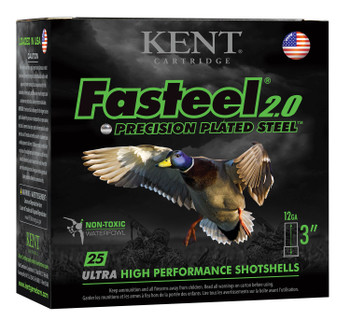
Kent Cartridge Fasteel 2.0 12 Gauge 3" 1 ¼ oz #1 Steel Buckshot - K123FS361
Kent Cartridge
$25.61The Fasteel 2.0 load pairs a 3-inch, 12 Gauge hull with a hefty 1 ¼ oz of #1 steel buckshot-exactly the payload hunters need for tight, dense patterns on waterfowl and upland birds. Custom-blended...$25.61
Brand Archive · Est. 1996
Kent Cartridge: History & Engineering
Founded in 1996 by a small group of dedicated waterfowl hunters determined to overcome the sluggish performance of early non-toxic steel shot, Kent Cartridge reshaped modern American shotgun ammunition from its manufacturing headquarters in Kearneysville, West Virginia. Inspired initially by a Penn State University metallurgical study combining tungsten powder and polymer to replicate lead's ballistic density, Kent acquired former Activ Industries production assets in West Virginia and partnered closely with its U.K. sister company, Gamebore Cartridge Company. With the 1998 debut of Fasteel high-velocity steel shot and subsequent breakthroughs in Bismuth, Tungsten Matrix, and Fasteel 2.0, Kent became a staple in duck blinds, pheasant fields, and sporting clays stations across North America.
Post-Lead-Ban Origins, Kearneysville WV & Gamebore Partnership
When the U.S. Fish and Wildlife Service implemented the nationwide ban on lead shot for migratory waterfowl hunting in 1991, hunters were stuck with first-generation steel loads traveling around 1,200 feet per second that lost energy rapidly downrange. In 1996, a group of sportsmen near Detroit learned of research from Penn State University blending dense tungsten powder with polymer to create a malleable, barrel-safe non-toxic shot rivaling lead. They launched Kent Cartridge, acquired manufacturing machinery and plant space in Kearneysville, West Virginia from the former Activ Industries operation, and ramped up commercial production in 1997 under Kent-Gamebore Corp.
Kent's transatlantic alliance with its British sister firm, Gamebore Cartridge Company, proved decisive. While Kent's Kearneysville plant engineered high-speed North American waterfowl and upland shells loaded with custom-blended double-base powders and cold-weather primers, Gamebore supplied proprietary specialty shot alloys including Bismuth, Tungsten Matrix, and high-antimony Diamond Shot lead. That vertical control over shot metallurgy allowed Kent to compete head-to-head with ammunition conglomerates many times its size.
Fasteel Revolution, Fasteel 2.0 & Non-Toxic Metallurgy
Recognizing that premium tungsten shells could not serve every morning in the marsh, Kent's founders tackled steel shot ballistics directly and introduced Fasteel in 1998. By working with propellant chemists to safely raise steel shot muzzle velocities to 1,425 to 1,560 feet per second while keeping chamber pressures uniform in sub-freezing marshes, Kent proved that high-velocity zinc-plated steel could deliver clean, lethal waterfowl kills at practical hunting distances. The line evolved into Fasteel 2.0 - featuring nickel-plated steel heads for corrosion resistance, a high-performance base-wad designed for reliable cycling in modern inertia and gas semi-autos, and precision-grade steel shot - and Fasteel+, which stacks two shot sizes in a single payload for denser long-range patterns.
Beyond steel, Kent Cartridge built one of the most complete specialty shotshell catalogs in the industry. Kent Bismuth Upland and Bismuth Waterfowl loads use dense, non-toxic bismuth alloy safe for vintage fixed-choke doubles and classic 16 Gauge, 20 Gauge, and 28 Gauge field guns. For upland and target shooters, Ultimate Fast Lead, Ultimate Pheasant, Steel Dove, and Elite Low Recoil-Training and Elite Steel Target shells pair tight concentric shot patterns with smooth recoil impulse.
Market Position & Key Peers
In the shotshell aisle, Kent Cartridge sits squarely among North America's top waterfowl and upland ammunition brands. Major competitors stocked at Global Ordnance include Federal (Black Cloud, Speed-Shok, and Prairie Storm), Winchester Ammo (Blind Side, Xpert, and AA target shells), Fiocchi (Golden Waterfowl and Golden Pheasant), Rio Ammunition (Blue Steel and Target Load), HEVI-Shot (HEVI-Steel and HEVI-Bismuth), and Remington Ammunition (Nitro-Steel and Gun Club). Kent maintains fiercely loyal waterfowl and upland followings thanks to consistent cold-weather ignition, clean-burning powders, and wide sub-gauge availability.
Global Ordnance stocks more than 60 in-stock Kent Cartridge shotshell loads spanning 12 Gauge, 16 Gauge, 20 Gauge, 28 Gauge, and .410 Bore. Hunters and clay shooters can select Fasteel 2.0 Waterfowl 3-inch and 2.75-inch loads, Fasteel+ layered 3x5 steel shot shells, Kent Bismuth Upland loads across 12, 16, 20, and 28 Gauge, Ultimate Fast Lead and Ultimate Pheasant loads, Steel Dove shells, Elite Steel Target and Elite Low Recoil-Training shells, and dedicated Kent Turkey loads.