
SHAW BARRELS
-

Shaw Barrels Barrel For 10 22 22lr 18" Bull Threaded
SHAW BARRELS
MSRP: $162.00 - $176.00$145.80 - $158.40The Shaw 1022BSS18TM is a precision‑machined, stainless‑steel barrel built to replace the stock barrel on a Ruger 10/22. Its 18‑inch length and bull profile provide a solid platform for improved...MSRP: $162.00 - $176.00$145.80 - $158.40 -
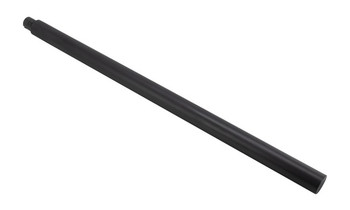
Shaw Barrels Barrel For 10 22 22lr 18" Bull
SHAW BARRELS
MSRP: $142.00 - $156.00$127.80 - $140.40The Shaw 1022BCM18 is a precision‑machined 18‑inch barrel designed for the Ruger 10/22 platform. Constructed from 4140 chrome‑moly steel and finished in a deep blued coating, it offers durability and...MSRP: $142.00 - $156.00$127.80 - $140.40 -
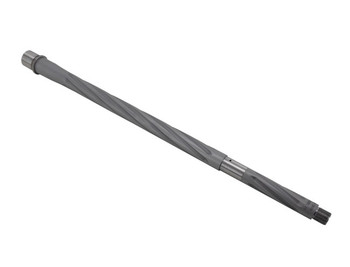
SHAW 18" .22 ARC HBAR Barrel - 416R Stainless Steel, 1/2×28 Thread
SHAW BARRELS
$259.20The Shaw AR‑15 barrel in .22 ARC is a drop‑in replacement for any standard AR‑15 upper. Constructed from 416R stainless steel, the barrel offers excellent corrosion resistance and a smooth bore...$259.20 -

Shaw Barrels 18" Bull Fluted Barrel for Ruger 10/22 .22 LR
SHAW BARRELS
$194.40This Shaw Barrels replacement barrel gives your Ruger 10/22 a classic bull‑style look with a modern twist. The 18‑inch barrel is spiral‑fluted to reduce weight while maintaining rigidity, and the...$194.40 -

Shaw AR-10 20" HBAR Barrel .22 Creedmoor - 416R Stainless Steel
SHAW BARRELS
$340.20The Shaw AR‑10 barrel is a drop‑in replacement designed for the AR‑10 platform. Machined from 416R stainless steel, it features a 20‑inch heavy (HBAR) contour with spiral fluting that sheds weight...$340.20 -

Shaw 18" HBAR Spiral Barrel for 6mm ARC - 5/8-24 Thread
SHAW BARRELS
$259.20The Shaw AR15HBSSHF186ARC is a purpose‑built heavy‑barrel (HBAR) for AR‑15 platforms tuned to the 6mm ARC cartridge. Constructed from 416R stainless steel, the barrel offers excellent corrosion...$259.20 -

Shaw 22" .204 Ruger HBAR Fluted Barrel - 416R Stainless Steel
SHAW BARRELS
$293.40The Shaw AR‑15 barrel is built from 416R stainless steel and features a straight‑fluted HBAR profile for a balance of weight savings and rigidity. Chambered for .204 Ruger, it sports a 1:12 rifling...$293.40 -
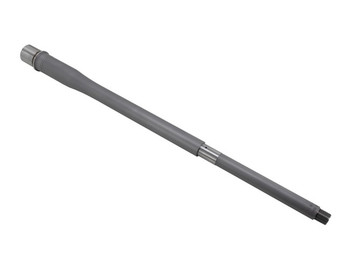
Shaw Barrels AR-10 20" .22 Creedmoor HBAR Threaded Barrel
SHAW BARRELS
$286.20The Shaw Barrels AR‑10 barrel is a drop‑in replacement built for the .22 Creedmoor cartridge. Machined from 416R stainless steel, the 20‑inch heavy (HBAR) profile delivers a stiff, resonant barrel...$286.20 -
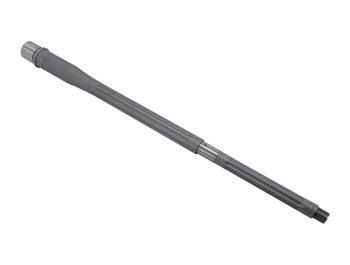
Shaw Barrels 20" Straight Fluted .22 Creedmoor AR-10 Barrel
SHAW BARRELS
$325.80The Shaw Barrels AR‑10 barrel is a drop‑in replacement designed for AR‑10 platforms. It’s chambered in the high‑velocity .22 Creedmoor cartridge and features a 20‑inch heavy (HBAR) profile with...$325.80 -
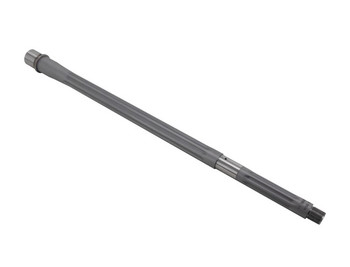
Shaw 6 mm ARC 18" Straight Barrel - AR-15 Replacement Barrel
SHAW BARRELS
$248.40The Shaw 6 mm ARC straight‑flute barrel delivers a clean, consistent bore for the newer 6 mm AR‑15 cartridge family. Made from stainless steel, the barrel resists corrosion and maintains accuracy...$248.40 -

Shaw 6mm ARC 18" HBAR AR-15 Barrel - Stainless Steel
SHAW BARRELS
$212.40The Shaw 6mm ARC 18‑inch HBAR delivers a straight‑cutter profile that maximizes velocity while keeping the barrel lightweight enough for a standard AR‑15 platform. Constructed from stainless steel,...$212.40 -
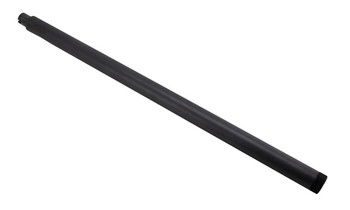
Shaw 1022BCM16TM 16.1" Bull Barrel for Ruger 10/22 .22 LR
SHAW BARRELS
$136.80The Shaw 1022BCM16TM barrel replaces the factory barrel on a Ruger 10/22, delivering a heavier bull profile that reduces vibration and enhances shot consistency. Constructed from high‑strength 4140...$136.80
Brand Archive · Est. 1914
Shaw Barrels: History & Engineering
Tracing its industrial heritage back to 1913-1914 in Bridgeville, Pennsylvania just outside Pittsburgh, Shaw Barrels - long revered by custom gunsmiths and riflemen as E.R. Shaw - is one of America's oldest continuous precision gun-barrel manufacturers. Originally established to manufacture heavy railroad fasteners before pivoting to small-arms production during World War I and evolving into Small Arms Manufacturing, the company spent more than a century honing deep-hole drilling, reaming, and button rifling for both major OEM firearm brands and custom rifle builders. Rebranded in recent years to Shaw Barrels to reflect its direct presence in modern modular rifle builds, the Bridgeville shop builds match-capable 416R stainless steel barrels for AR-15, AR-10, bolt-action, and Ruger 10/22 rifles.
Origins & Early Milestones
The enterprise that became E.R. Shaw and today's Shaw Barrels opened its doors in Bridgeville, Pennsylvania around 1913-1914, initially machining rugged nuts and bolts to supply Western Pennsylvania's booming railroad and heavy-industry corridors. As the United States mobilized for World War I, the shop converted its machining capacity to small-arms parts, emerging after the armistice as Small Arms Manufacturing and dedicating itself to precision rifle barrel production.
Over the ensuing decades under the E.R. Shaw name - guided by the Shaw family and later generations of dedicated Pennsylvania machinists including the Behling family - the Bridgeville factory quietly became one of the highest-volume OEM barrel suppliers in the American firearms industry while cultivating a loyal custom-gunsmith following for re-barreling classic Mauser, Remington, Savage, and Winchester actions. Transitioning its public identity to Shaw Barrels and Shaw Precision Guns, the company modernized its CNC turning, helical fluting, and chambering capabilities to serve the booming AR-15, AR-10, and rimfire precision markets directly.
Landmark Platforms
Shaw Barrels built its reputation around precision button-rifled barrels turned from ordnance-grade 416R stainless steel and chrome-moly steels, stressed-relieved and finished to tight bore concentricity. Rather than confining itself to legacy standard calibers, Shaw aggressively supports modern flat-shooting precision cartridges on gas-gun platforms. For AR-15 builders, Shaw offers 18-inch 6mm ARC barrels in HBAR, Straight, and Spiral Fluted threaded configurations (with 5/8x24 muzzles for brakes and suppressors), 18-inch .22 ARC HBAR 416R stainless barrels with 1/2x28 muzzle threads, and high-velocity 22-inch .204 Ruger HBAR Fluted varmint barrels.
For large-frame AR-10 long-range builders, Shaw turns 20-inch .22 Creedmoor 416R stainless steel HBAR barrels in standard, threaded, and Straight Fluted profiles - letting predator hunters and precision competitors tap blistering .22 Creedmoor ballistics in a semi-automatic chassis. On the rimfire side, Shaw's drop-in bull barrels for the Ruger 10/22 (.22 LR) - available in 16.1-inch and 18-inch bull, threaded, and Bull Fluted profiles - give rimfire enthusiasts an immediate accuracy upgrade backed by over a century of Pennsylvania barrelmaking craft.
Market Position & Key Peers
In the American aftermarket barrel market, Shaw Barrels competes alongside respected specialists stocked at Global Ordnance including Faxon Firearms, Ballistic Advantage, Proof Research, Tactical Solutions, and Wilson Combat. Shaw occupies a compelling sweet spot: deeper historical barrelmaking pedigree than newer AR-only shops, paired with true custom-shop fluting options (straight and spiral) and modern precision calibers like 6mm ARC, .22 ARC, and .22 Creedmoor at practical working-shooter pricing.
Global Ordnance stocks a curated lineup of Shaw Barrels ready for custom rifle upgrades, including 416R stainless steel AR-15 barrels in 6mm ARC, .22 ARC, and .204 Ruger; AR-10 20-inch HBAR and fluted barrels in .22 Creedmoor; and 16.1-inch and 18-inch bull, threaded, and fluted .22 LR replacement barrels for Ruger 10/22 rifles.