

Winchester Ammo
Olin Industrial Cartridge Heritage · EST. 1866

Winchester Ammunition
Olin Corporation's flagship ammunition division behind Super-X, AA compression-formed target shotshells, Ranger T-Series duty loads, and Lake City military small-arms production.
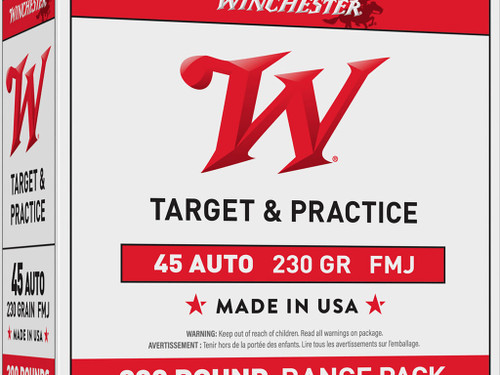
Shop Winchester Ammunition by Product Line
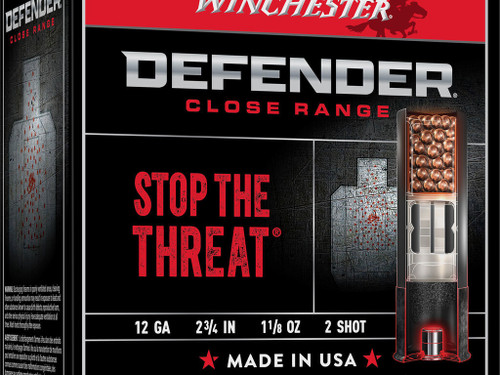
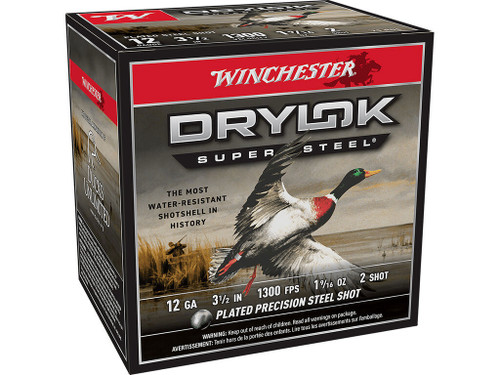
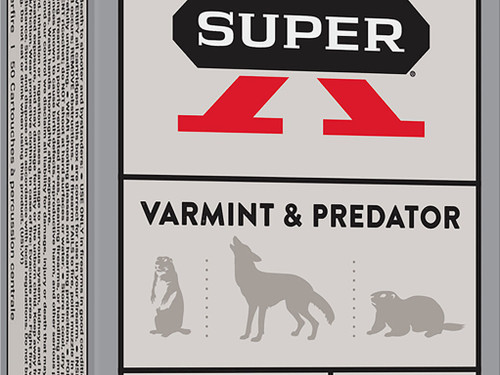
-
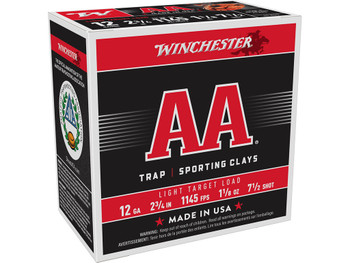
Winchester Ammo AA127 AA Light Target 12Gauge 2.75" 1 1/8oz 7.5Shot 25 Per Box/10 Case
Winchester Ammo
$14.47Winchester’s AA Light Target load packs a 1 1/8 oz charge of #7.5 lead into a 2.75‑inch plastic hull, giving you a light‑weight, high‑velocity shell that breaks cleanly on target. The AA‑design wads...$14.47 -
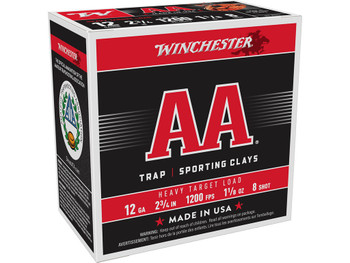
Winchester Ammo AAM128 AA Heavy 12Gauge 2.75" 1 1/8oz 8Shot 25 Per Box/10 Case
Winchester Ammo
$14.47Winchester’s AA Heavy Target load packs a hefty 1 1/8 oz of #8 lead into a 2.75" brass case, delivering the dense patterns shooters rely on for clay and trap disciplines. The brass hulls are designed...$14.47 -

Winchester Ammo X28H7 Super X Heavy Game Load High Brass 28Gauge 2.75" 1oz 7.5Shot 25Per Box/10 Case
Winchester Ammo
$23.61Winchester’s Super‑X High Brass Game Load is built around a 2.75" 28 Gauge hull that seats cleanly in any standard‑length 28 Gauge chamber. The high‑brass case not only looks the part but also holds...$23.61 -

Winchester Ammo X28H6 Super X Heavy Game Load High Brass 28Gauge 2.75" 1oz 6Shot 25 Per Box/10 Case
Winchester Ammo
$23.61The 2.75‑inch hull is a step up from the standard 2‑3/4" length, giving a bit more case capacity while still fitting in all standard 28‑gauge magazines. Paired with a full ounce of #6 shot, the load...$23.61 -
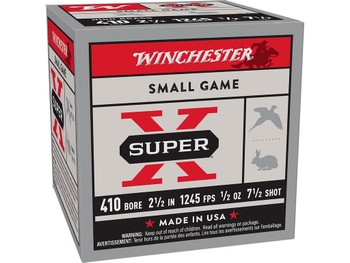
Winchester Ammo X417 Super X Heavy Game Load High Brass 410Gauge 2.50" 1/2oz 7.5Shot 25 Per Box/10 Case
Winchester Ammo
$20.69The Super‑X 410 GA shell is built around a high‑brass head that resists deformation, letting the heavy #7.5 lead load fire cleanly at 1,245 fps. The plastic hull keeps the box weight down—1.15 lb for...$20.69 -

Winchester Ammo X414 Super X Heavy Game Load High Brass 410Gauge 2.50" 1/2oz 4Shot 25 Per Box/10 Case
Winchester Ammo
$20.69If you’re loading a .410 Gauge with a 2½‑inch chamber, the Super‑X X414 drops right in and feeds cleanly. The 1/2‑ounce of #4 lead shot gives a heavy, dense pattern that holds up on medium‑size game...$20.69 -

Winchester Ammo X125 Super X Game Load High Brass 12Gauge 2.75" 1 1/4oz 5Shot 25 Per Box/10 Case
Winchester Ammo
$18.96The 2.75‑inch, 1 ¼‑ounce Super‑X shell packs a full‑length brass case and a one‑piece hinged wad, delivering a tight, consistent pattern that holds up at longer distances. The #5 lead shot size...$18.96 -

Winchester Ammo X4137 Super X Heavy Game Load High Brass 410Gauge 3" 11/16oz 7.5Shot 25 Per Box/10 Case
Winchester Ammo
$23.94What matters in a game‑load shell is the balance of shot weight, velocity, and case strength. Winchester’s Super X Heavy Game Load packs a hefty 11/16 oz of #7.5 lead into a 3‑inch high‑brass case,...$23.94 -

Winchester Ammo X4136 Super X Heavy Game Load High Brass 410Gauge 3" 11/16oz 6Shot 25 Per Box/10 Case
Winchester Ammo
$21.84Winchester’s Super‑X line has been trusted since the 1920s, and the .410 GA Heavy Game Load lives up to that reputation. A 3‑inch shell packed with 11/16 oz of #6 lead shot gives you the punch you...$21.84 -

Winchester Ammo X4134 Super X Heavy Game Load High Brass 410Gauge 3" 11/16oz 4Shot 25 Per Box/10 Case
Winchester Ammo
$21.84The 3‑inch hull of this Winchester Super‑X shell fits the standard 410 Gauge chamber while keeping the overall cartridge length short enough for smooth cycling in most pump‑action and single‑shot...$21.84 -
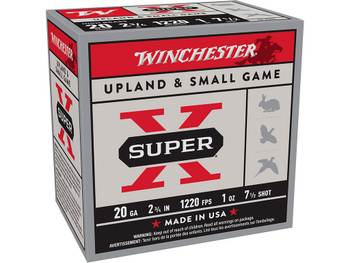
Winchester Ammo X207 Super X Heavy Game Load High Brass 20Gauge 2.75" 1oz 7.5Shot 25 Per Box/10 Case
Winchester Ammo
$19.67A 2.75‑inch, 20‑gauge shell loaded with a full ounce of #7.5 lead shot hits the sweet spot between penetration and pattern density for deer, hogs, and other heavy game. The high‑brass case not only...$19.67 -

Winchester Ammo X204 Super X Heavy Game Load High Brass 20Gauge 2.75" 1oz 4Shot 25 Per Box/10 Case
Winchester Ammo
$19.67The high‑brass hull on this Super X load means the case can handle higher pressures without stretching, giving you a clean extraction and consistent performance shot after shot. Pair that with a 209...$19.67 -
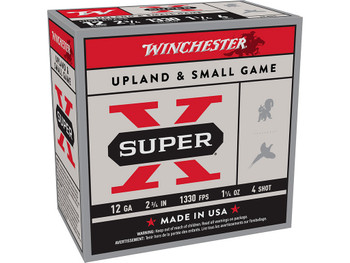
Winchester Ammo X124 Super X Game Load High Brass 12Gauge 2.75" 1 1/4oz 4Shot 25 Per Box/10 Case
Winchester Ammo
$18.96Winchester’s Super‑X line has been a go‑to for upland hunters for decades, and the X124 high‑brass version keeps that reputation alive. Each 2.75‑inch hull is packed with 1 ¼ oz of #4 lead shot,...$18.96 -

Winchester Ammo X127 Super X Game Load High Brass 12Gauge 2.75" 1 1/4oz 7.5Shot 25 Per Box/10 Case
Winchester Ammo
$18.96Winchester’s Super‑X line has been a go‑to for upland hunters for decades, and the X127 Hi‑Brass version pushes that pedigree further. The 2.75‑inch, high‑brass hull gives a little extra case...$18.96 -

Winchester Ammo X126 Super X Game Load High Brass 12Gauge 2.75" 1 1/4oz 6Shot 25 Per Box/10 Case
Winchester Ammo
$18.96Winchester’s Super X line has been a go‑to for upland hunters for decades, and the Game Load version keeps that reputation alive. The high‑brass hull is tougher than polymer, so you won’t see the...$18.96 -
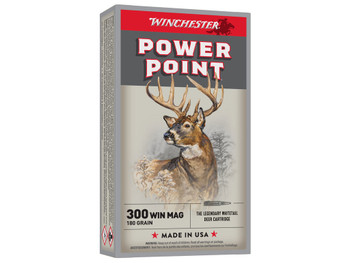
Winchester Ammo X30WM2 Power-Point 300WinMag 180gr 20 Per Box/10 Case
Winchester Ammo
$45.66A 180‑grain soft‑point projectile sits behind a brass case that’s been tuned for the .300 Winchester Magnum’s high‑pressure magnum chamber. The Power‑Point tip expands reliably on impact, making it a...$45.66 -
Winchester Ammo SBST3006B Ballistic Silvertip 30-06Springfield 180gr Rapid Controlled Expansion Polymer Tip 20 Per Box/10 Case
Winchester Ammo
$37.82The 180‑grain polymer‑tip projectile is the centerpiece of Winchester’s Ballistic Silvertip line, delivering rapid controlled expansion that’s trusted for deer and elk. Paired with a boat‑tail shape,...$37.82 -

Winchester Ammo S12PDX1 PDX1 Defender Combo 12Gauge 2.75" 1oz Rifled Slug 3Plated 00Buck Shot 10 Per Box/10 Case
Winchester Ammo
$22.72Winchester’s Defender Elite PDX1 pairs a 1 oz rifled slug with three Grex‑buffered #00 buckshot pellets in a single 2.75" 12 ga shell. The slug’s rifling gives it a tight flight path, while the...$22.72 -
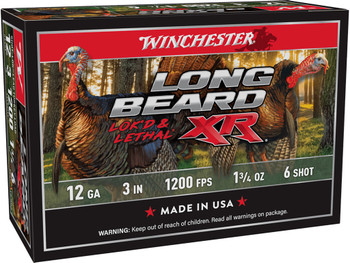
Winchester Ammo STLB1236 Long Beard XR Shot-Lok 12Gauge 3" 1 3/4oz 6Shot 10 Per Box/10 Case
Winchester Ammo
$28.88When you need a deep‑penetrating pattern for turkey or waterfowl, the Long Beard XR’s 3‑inch case lets Winchester load a hefty 1 ¾ oz of #6 copper‑plated lead. The larger pellet size and heavier shot...$28.88 -
Winchester Ammo X223R Super X 223Rem 55gr Jacketed Soft Point 20 Per Box/10 Case
Winchester Ammo
$23.02When you need a dependable all‑purpose load for .223 Remington, Winchester’s Super‑X 55‑grain soft‑point hits the sweet spot. The pointed soft‑point design expands reliably on game while still...$23.02 -
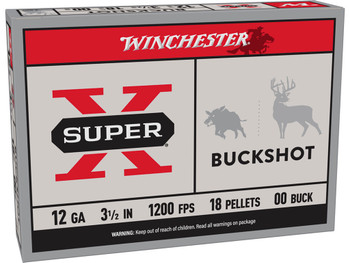
Winchester Ammo XB12L00 Super X 12Gauge 3.50" 18Pellets 00Buck Shot 5 Per Box/50 Case
Winchester Ammo
$22.63These Super X shells pack a classic 00 buckshot load into a 3.5‑inch plastic hull. The 18‑pellet count gives a tight, lethal pattern at close to medium ranges, making them a go‑to for deer hunters...$22.63 -
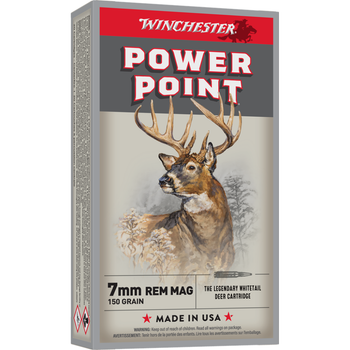
Winchester Ammo X7MMR1 Super X 7mmRemMag 150gr Power Point 20 Per Box/10 Case
Winchester Ammo
$45.41The 150‑grain Power‑Point projectile is the workhorse of the Super‑X line – a soft‑point tip that reliably expands while the long, high‑BC bullet stays on target at extended ranges. Pair it with a...$45.41 -

Winchester Ammo X3006CLF Copper Impact 30-06Springfield 150gr Copper Extreme Point Lead Free 20 Per Box/10 Case
Winchester Ammo
$46.03The 150‑grain Copper Extreme Point bullet is all‑copper, giving it superior weight retention compared to conventional jacketed lead‑core ammo. That means the round stays on target longer, especially...$46.03 -
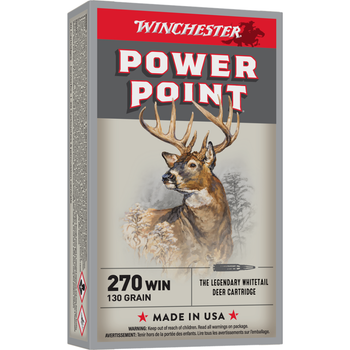
Winchester Ammo X2705 Power-Point 270Win 130gr 20 Per Box/10 Case
Winchester Ammo
$32.19The 130‑grain Power‑Point projectile in Winchester’s Super‑X line is engineered for reliable expansion on medium‑sized game. Its soft‑point tip initiates controlled mushrooming, delivering consistent...$32.19 -
Winchester Ammo X22H2 Super X 22Hornet 46gr Jacketed Hollow Point 50 Per Box/10 Case
Winchester Ammo
$68.99The 46‑grain jacketed hollow‑point in Winchester’s Super‑X .22 Hornet is tuned for consistent expansion, giving you reliable terminal effect on varmint and small‑game targets. Packaged 50 rounds per...$68.99 -

Winchester Ammo STLB12L6 Long Beard XR Shot-Lok 12Gauge 3.50" 2oz 6Shot 10 Per Box/10 Case
Winchester Ammo
$35.52Winchester’s Long Beard XR loads a 3.5‑inch, 2‑ounce #6 copper‑plated lead shot into a standard 12 Gauge shell, giving you a dense payload that punches through tough game. The Shot‑Lok resin coating...$35.52 -
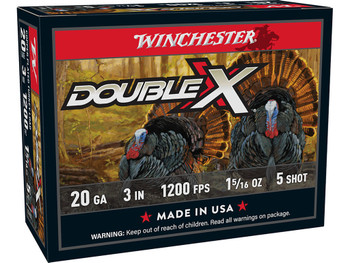
Winchester Ammo STH2035 Double X High Velocity Turkey 20Gauge 3" 1 5/16oz 5Shot 10 Per Box/10 Case
Winchester Ammo
$18.40If you’re chasing gobblers, the Double X Turkey load gives you a hard‑hitting payload that stays tight out to the typical turkey range. The 3‑inch brass case holds 1 5/16 oz of #5 copper‑plated lead,...$18.40 -

Winchester Ammo X12RS15 Super X 12Gauge 2.75" 1oz Rifled Slug Shot 5 Per Box/50 Case
Winchester Ammo
$7.15When you need a slug that drops straight and hits hard, Winchester’s Super‑X puts a 1 oz lead slug into a 2.75" 12 Gauge shell with a rifled, hollow‑point design. The rifling keeps the slug stable in...$7.15 -

Winchester Ammo SB1200 Double X High Velocity 12Gauge 2.75" 9Pellets 00Buck Shot 5 Per Box/50 Case
Winchester Ammo
$16.64Winchester’s Double X High‑Velocity buckshot is built around a 2.75‑inch steel case that seats cleanly in any standard 12 gauge action. The short length keeps feeding reliable in both semi‑automatic...$16.64 -
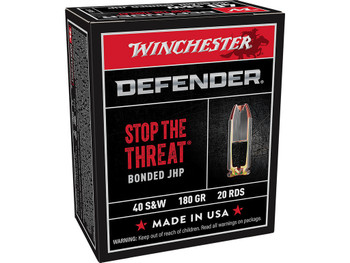
Winchester Ammo S40SWPDB1 Defender 40S&W 180gr Bonded Jacket Hollow Point 20 Per Box/10 Case
Winchester Ammo
$22.99The bonded‑jacket hollow‑point is the centerpiece of Winchester’s Defender line—its chemically fused jacket keeps the bullet intact long enough to reach vital organs, then expands about 1.5 times for...$22.99 -
Winchester Ammo Q4309 USA 357Sig 125gr Full Metal Jacket 50 Per Box/10 Case
Winchester Ammo
$36.92Winchester’s USA White Box .357 SIG load pairs a 125‑grain FMJ projectile with a reliable powder charge, giving shooters a consistent platform for practice and defensive carry. The 50‑round box,...$36.92 -
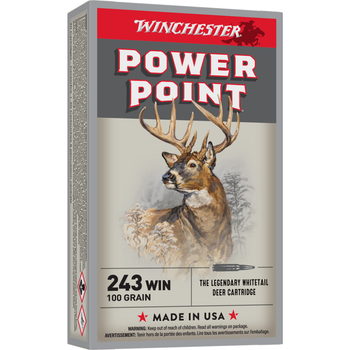
Winchester Ammo X2432 Power-Point 243Win 100gr 20 Per Box/10 Case
Winchester Ammo
$32.19The Power‑Point bullet’s polymer tip initiates expansion early, giving a clean cut and reliable terminal performance in .243 Winchester chambers. Paired with a 100‑grain weight, the load balances...$32.19 -

Winchester Ammo STLB2036 Long Beard XR Shot-Lok 20Gauge 3" 1 1/4oz 6Shot 10 Per Box/10 Case
Winchester Ammo
$28.88What matters most in a 20 Gauge load is pattern consistency, and Winchester’s Shot‑Lok coating does exactly that. The copper‑plated #6 lead pellets stay round longer, so you get tighter groups...$28.88 -

Winchester Ammo STLB12L5 Long Beard XR Shot-Lok 12Gauge 3.50" 2oz 5Shot 10 Per Box/10 Case
Winchester Ammo
$35.52Shot‑Lok technology is the centerpiece of Winchester’s Long Beard XR. The resin‑coated copper‑plated lead pellets stay rounder as they travel down the barrel, delivering the tightest patterns...$35.52 -
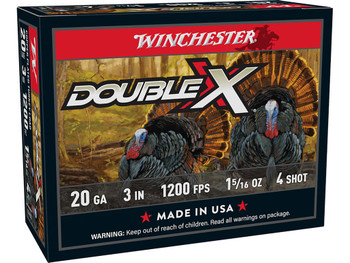
Winchester Ammo STH2034 Double X High Velocity Turkey 20Gauge 3" 1 5/16oz 4Shot 10 Per Box/10 Case
Winchester Ammo
$18.40Winchester’s Double X line has been a turkey hunter’s go‑to for decades, and the High Velocity 20 Gauge load keeps that reputation alive. The 3‑inch brass case holds 1 5/16 oz of #4 copper‑plated...$18.40 -

Winchester Ammo STH1234 Double X High Velocity Turkey 12Gauge 3" 1 3/4oz 4Shot 10 Per Box/10 Case
Winchester Ammo
$23.38What matters in a turkey load is a consistent pattern and enough energy to drop a gobbler cleanly. Winchester’s Double X packs 1 3/4 oz of #4 copper‑plated lead shot into a 3‑inch 12‑gauge shell,...$23.38
Brand Archive · Est. 1866
Winchester Ammunition: History & Engineering
Rooted in Oliver Winchester's 1866 New Haven enterprise and Franklin W. Olin's 1898 Western Cartridge Company in East Alton, Illinois, Winchester Ammunition stands as one of the foundational pillars of American ballistic manufacturing. After Western Cartridge acquired the financially troubled Winchester Repeating Arms assets in 1931 and merged them into the Olin Corporation, the brand forged an unbroken line of commercial and military milestones: Super-X progressive-burning hunting loads, AA compression-formed clay-target hulls, Ballistic Silvertip rifle cartridges, and modern M193 and M855 military production. Following its 2020 assumption of operations at the Lake City Army Ammunition Plant, Winchester serves as the largest small-caliber ammunition supplier to the United States Armed Forces.
Origins & Early Milestones
Winchester Ammunition's dual lineage unites two giants of nineteenth-century American ordnance. In 1866, Oliver Winchester reorganized the New Haven Arms Company into the Winchester Repeating Arms Company, soon introducing metallic cartridges like the .44-40 Winchester and .30-30 Winchester that popularized lever-action rifles across the American frontier. Meanwhile, in 1898, engineer Franklin W. Olin established the Western Cartridge Company in East Alton, Illinois, initially supplying black powder and sporting primers to Midwest coal miners and hunters. Under Franklin and his sons John and Spencer Olin, Western expanded aggressively into brass rolling mills, smokeless propellant research, and non-corrosive primers.
When the Great Depression pushed Winchester Repeating Arms into receivership in 1931, the Olin family purchased the company and unified its ballistic engineering with Western's East Alton industrial complex. The resulting Olin Corporation retained the Winchester Ammunition trademark permanently even after firearms manufacturing separated under licensing agreements decades later. During World War II, East Alton and its associated plants produced billions of .30 Carbine, .30-06 Springfield, and .50 BMG rounds while developing spherical Ball Powder, a clean-metering smokeless propellant chemistry that still underpins military and commercial rifle loading worldwide.
Landmark Platforms
Winchester's technical milestones reshaped how hunters, competitors, and military armories measure cartridge performance. Introduced by John Olin's Western Cartridge team in 1922, Super-X pioneered progressive-burning smokeless powders that built chamber pressure gradually, yielding higher velocities, tighter long-range waterfowl patterns, and heavier energy transfer without exceeding safe breech pressures. In 1965, Winchester transformed competitive trap, skeet, and sporting clays with the AA shotshell, utilizing a one-piece compression-formed plastic hull paired with high-antimony hard lead shot and cushioned AA wads. The hull's remarkable reloadability made AA the standard reference shell for competitive shotgunners using Browning, Beretta, and Winchester Repeating Arms over-unders.
Across centerfire rifle and handgun lines, Winchester introduced landmark commercial chamberings including .270 Winchester, .308 Winchester, .243 Winchester, and .300 Win Mag, while advancing terminal ballistics through Ranger T-Series and Defender PDX1 bonded defensive rounds. In 2020, Olin's Winchester division assumed management and operational control of the Lake City Army Ammunition Plant in Independence, Missouri, adding massive 5.56 NATO, 7.62x51mm NATO, and .50 BMG capacity alongside its core East Alton, Illinois and Oxford, Mississippi manufacturing centers.
Market Position & Key Peers
As an independent operating division of publicly traded Olin Corporation, Winchester Ammunition competes directly against The Kinetic Group brands Federal Ammunition, Remington Ammunition, and Speer, as well as Hornady and Fiocchi across consumer, law enforcement, and defense markets. Winchester's vertical integration in brass strip production, primer manufacturing, and Lake City military-grade loading gives it substantial scale in high-demand calibers. The company has also expanded precision hunting offerings with Deer Season XP large-diameter polymer-tipped bullets, Copper Impact lead-free projectiles, and 6.8 Western long-range cartridges co-developed with Browning.
Global Ordnance carries a deep inventory of Winchester Ammunition tailored for range practice, personal protection, clay sports, and big-game seasons. Shooters can stock Winchester USA White Box training loads in 9mm Luger, .45 ACP, and .40 S&W alongside M193 and M855 5.56 NATO rifle packs manufactured at Lake City. Hunters and shotgunners rely on Super-X rimfire .22 LR and centerfire .30-30 Winchester, Power-Point and Deer Season XP in .308 Winchester and 6.5 Creedmoor, and competition-proven AA 12 Gauge and 20 Gauge target loads.