
About Barnes Bullets
Monolithic All-Copper Pioneer

Barnes Bullets: History & Engineering
Mona, Utah ballistic innovator behind the 1989 all-copper X-Bullet, grooved TSX and polymer-tipped TTSX projectiles, LRX long-range bullets, and VOR-TX hunting ammunition.
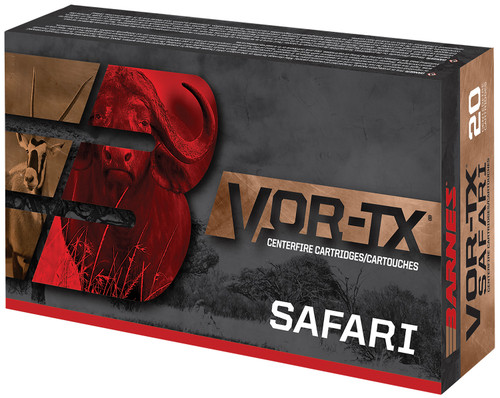
Founded in 1932 by Colorado wildcatter and handloader Fred Barnes and transformed into a global terminal-ballistics powerhouse after Randy and Coni Brooks purchased the business in 1974, Barnes Bullets pioneered modern monolithic all-copper hunting projectiles. Inspired by a 1985 Alaskan brown bear hunt where traditional lead-core bullets proved structurally inconsistent against heavy bone, Randy Brooks engineered the 1989 X-Bullet from solid pure copper bar stock, eliminating jacket-core separation forever. Operating from a modern manufacturing plant and underground ballistic lab in Mona, Utah alongside sister brand Sierra Bullets, Barnes sets the industry benchmark for high-weight-retention lead-free rifle and handgun projectiles.
Origins & Early Milestones
Fred Barnes started Barnes Bullets in 1932 in a modest basement workshop in Bayfield, Colorado, swaging heavy-jacketed Barnes Original lead-core bullets for Depression-era wildcatters and big-game handloaders seeking custom weights unavailable from major eastern factories. For four decades, Fred built a loyal following among African safari hunters and Rocky Mountain riflemen who prized his thick pure copper tubing jackets. By the early 1970s, however, Fred was ready to retire and the business had slowed considerably.
In 1974, avid hunters Randy and Coni Brooks acquired Barnes Bullets from Fred and moved the equipment to American Fork, Utah, initially running swaging presses out of their family home while building production capacity. The pivotal turning point arrived during an autumn 1985 Alaskan brown bear hunt, when Randy saw firsthand how conventional lead-core bullets could shed cores or break apart under heavy angled impacts. Four years of metallurgy, lathe turning, and gelatin testing produced the 1989 Barnes X-Bullet, an all-copper expanding projectile that opened into four razor-sharp petals while retaining nearly 100 percent of its weight. Surging demand soon drove a 1991 aerospace-tooling investment and eventual relocation to a custom headquarters and underground test range in Mona, Utah.
Landmark Platforms
While the original 1989 X-Bullet revolutionized penetration and weight retention, early smooth-shanked copper bullets sometimes raised chamber pressures and increased bore copper fouling. Barnes engineers solved both issues in 2003 with the Triple-Shock X (TSX), machining precision circumferential relief grooves into the copper shank. Those driving bands sharply reduced bearing-surface friction, lowered peak pressures, curbed copper fouling, and delivered match-grade accuracy across standard factory barrels.
Barnes followed the TSX with the Tipped Triple-Shock X (TTSX), seating a streamlined polymer tip into a redesigned nose cavity to boost ballistic coefficients and initiate reliable four-petal expansion at longer distances. For extreme mountain ranges, the Long Range X (LRX) further refines nose geometry and boattail drag to expand cleanly down to roughly 1,600 fps. In the late 2000s, Barnes entered complete loaded ammunition with VOR-TX and VOR-TX LR hunting cartridges, alongside TAC-TX solid copper defense loads tuned for 5.56 NATO and .300 Blackout carbines and TAC-XPD all-copper personal defense handgun loads in 9mm Luger, .380 ACP, and .45 ACP.
Market Position & Key Peers
Following earlier corporate chapters under Remington Outdoor Company and Clarus Corporation, Barnes Bullets and sister company Sierra Bullets were acquired in February 2024 by Bullseye Acquisitions, an affiliate of JDH Capital Company (which also owns Savage Arms), keeping Mona, Utah manufacturing anchored and focused strictly on precision projectiles and loaded ammunition. In lead-free hunting and tactical markets, Barnes competes directly against Hornady CX, Nosler E-Tip, and Federal Ammunition Trophy Copper while also supplying OEM bullets for premium factory hunting lines from major brands.
Global Ordnance stocks a wide selection of Barnes Bullets components and VOR-TX loaded cartridges built for western big game, dangerous game, and lead-free conservation zones. Hunters carrying Ruger, Browning, Savage Arms, Tikka, or Weatherby rifles can stock VOR-TX TTSX and LRX loads in 6.5 Creedmoor, .308 Winchester, .30-06 Springfield, .270 Winchester, 7mm Rem Mag, and .300 Win Mag. Carbine owners and handloaders using RCBS or Lee Precision presses rely on TAC-TX .300 Blackout and 5.56 NATO projectiles plus Match Burner target bullets for tight range groups.
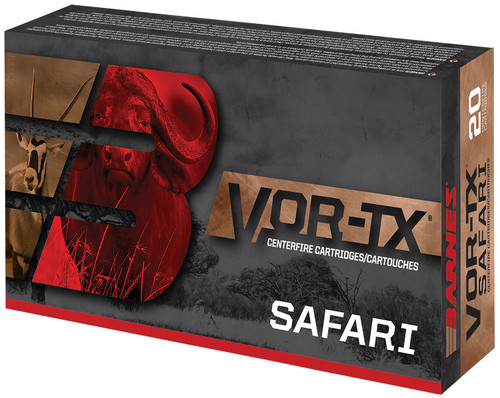 Barnes VOR-TX Safari 470 Nitro Express 500 gr TSX Flat-Base - 22030
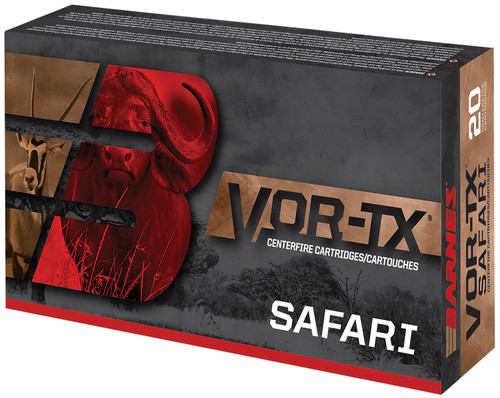 Barnes Bullets VOR-TX Safari TSX 416 Rigby 400 gr Flat Base - 22034
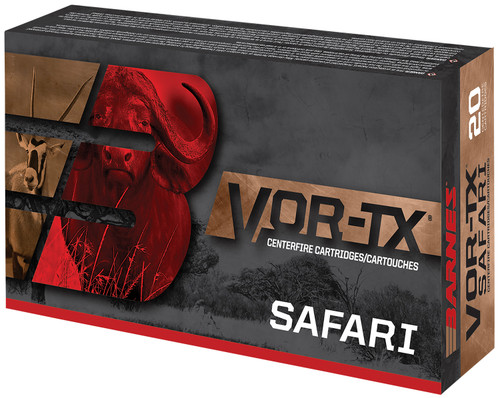 Barnes Bullets VOR-TX Safari TSX 500gr Flat Base .458 Lott - 22027