

Smith & Wesson
American Revolver & M&P Pioneer · 1852
Smith & Wesson
Founded by Horace Smith and Daniel B. Wesson in 1852, Smith & Wesson pioneered metallic-cartridge revolvers and now builds the M&P pistol, Bodyguard, and Performance Center lines in Tennessee.

-

Smith Wesson M&P15 Blued Steel
Smith & Wesson
$26.45 - $30.91When you need a magazine that drops into the M&P15 lower without a hitch, this blued‑steel replacement does the job. The steel body, finished in a classic blued coat, takes the abuse of the range...$26.45 - $30.91 -
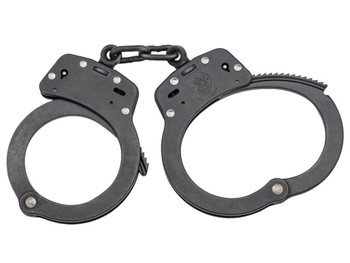
Smith Wesson 100 Slot Lock Steel
Smith & Wesson
$27.23 - $36.74The key‑lock double‑locking system is the centerpiece of this handcuff – a key engages the lock, then a secondary lock holds the cuff firmly, giving a clear visual indication that the cuff is secured...$27.23 - $36.74 -
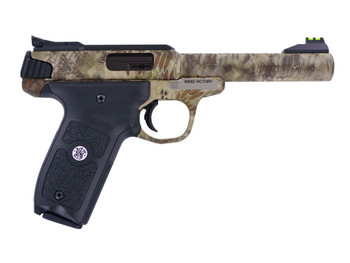
Smith & Wesson 10297 SW22 Victory Full Size Frame 22 LR 10+1 5.50" Kryptek Highlander Match Grade Steel Barrel & Frame, Black Textured Grip, Thumb Safety
Smith & Wesson
$481.85The Victory’s standout is its 5.5" match‑grade barrel, machined from steel and finished in Kryptek Highlander. That combo gives a crisp, consistent bore that excels in accuracy‑critical .22 LR...$481.85 -
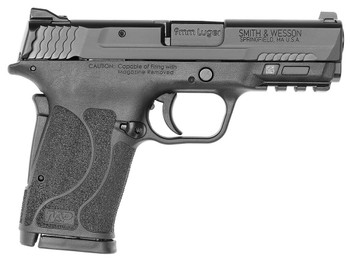
Smith & Wesson 12437 M&P Shield EZ M2.0 Micro-Compact Frame 9mm Luger 8+1, 3.67" Black Armornite Steel Barrel & Serrated Slide, Matte Black Polymer Frame w/Picatinny Rail, Grip Safety
Smith & Wesson
$501.40The EZ M2.0’s 3.6‑inch barrel and 18‑degree grip angle give a natural point of aim while keeping the slide short enough for quick cycling. The internal hammer design, paired with a 4.1‑lb trigger...$501.40 -

Smith & Wesson 163808 Model 642 Ladysmith 38 S&W Spl +P 5 Shot 1.88" Stainless Steel Barrel/Cylinder, Matte Silver Aluminum Alloy J-Frame, Wood Grip, Snag-free Enclosed Hammer, Internal Lock
Smith & Wesson
$510.65The internal hammer on this Model 642 Ladysmith sits flush inside the frame, giving the revolver a clean, snag‑free profile that’s ideal for concealed carry. Pair that with a 1.88‑inch...$510.65 -
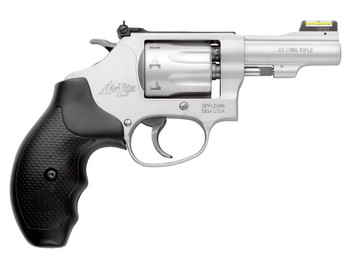
Smith & Wesson 160221 Model 317 Kit Gun *CA Compliant 22 LR 8 Shot 3" Stainless Steel Barrel, Aluminum Alloy Cylinder & J-Frame, HiViz Fiber Optic Green Front/Adjustable Rear Sights, Synthetic Grip
Smith & Wesson
$832.60The Model 317’s three‑inch stainless barrel gives a compact silhouette while still offering a decent sight radius, so you get better accuracy than ultra‑short pocket revolvers without adding bulk...$832.60 -
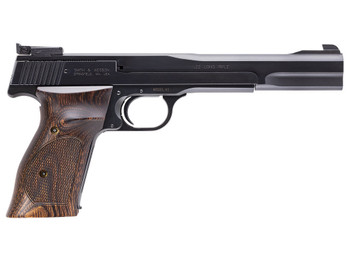
Smith & Wesson 130512 41 Full Size Frame 22 LR 10+1, 7" Blued Button Rifled Steel Barrel, Serrated Slide & Frame, Checkered Wood Target Grip
Smith & Wesson
$2,075.75The Model 41’s single‑action, hammer‑fired design pairs a crisp, user‑adjustable trigger with a 7‑inch button‑rifled barrel, giving you the repeatable shot placement needed for serious rimfire...$2,075.75 -
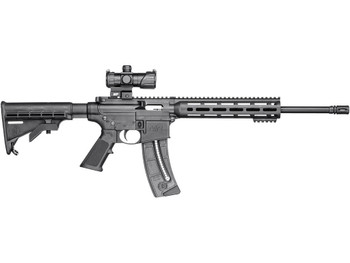
Smith & Wesson 12722 M&P15 Sport OR 22 LR 25+1 16.50" Black Threaded Barrel, Matte Black Aluminum Receiver w/Picatinny Rail, M-LOK Handguard, Black 6 Position Synthetic Stock, Black Polymer Grip, S&W
Smith & Wesson
$500.25The M&P15‑22 Sport drops the heavy AR‑15 feel into a lightweight .22 LR platform. Its 16.5" threaded barrel gives you the option to add a suppressor or flash hider, while the black finish keeps it...$500.25 -
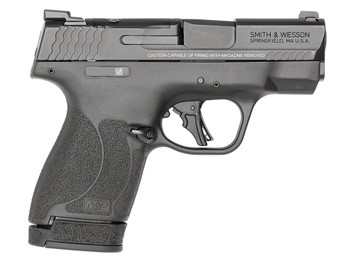
Smith & Wesson 13534 M&P Shield Plus Optic Ready Compact 9mm Luger 10+1/13+1 3.10", Black, Optic Cut Slide, Polymer Frame, Tritium Sights (NO Thumb Safety)
Smith & Wesson
$462.30The M&P Shield Plus packs a 3.1" Armornite‑finished barrel into a micro‑compact frame, delivering a balance of concealability and reliable performance. The optics‑ready slide is pre‑cut for a compact...$462.30 -
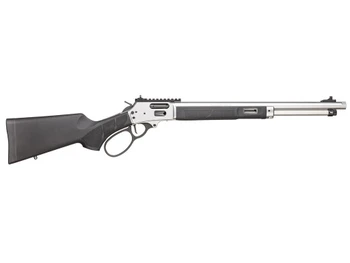
Smith & Wesson 13814 1854 45 Long Colt 9+1 19.25" Stainless Threaded Barrel, Picatinny Rail Stainless Steel Receiver, M-LOK Forend, Fixed Black Synthetic Stock
Smith & Wesson
$1,185.65The Model 1854’s forged 416 stainless‑steel receiver paired with a 410 stainless barrel gives it a corrosion‑resistant backbone that holds up to harsh field conditions. The 19.25" barrel is threaded...$1,185.65 -
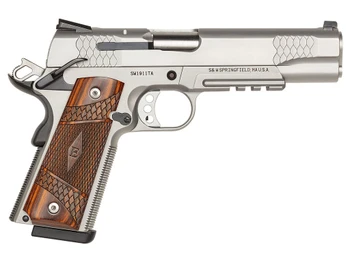
Smith & Wesson 108411 1911 E-Series 45 ACP 5" Barrel 8+1, Satin Stainless Steel Frame & Slide, Laminate Wood E Series Grip, Tactical Accessory Rail, Manual Grip & Thumb Safety
Smith & Wesson
$1,568.60The 5‑inch barrel on this SW1911 E‑Series Tactical gives you a crisp sight picture and a manageable recoil impulse, making it a solid choice for both range work and defensive carry. Stainless‑steel...$1,568.60 -
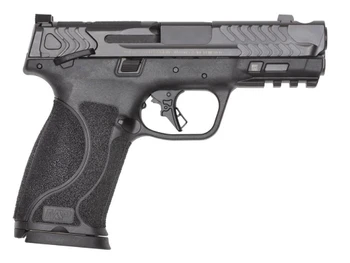
Smith & Wesson 14414 M&P PC M2.0 10mm Auto 10+1 4" Black Armornite Stainless Steel Ported Barrel & Optic Ready/Ported/Serrated Slide, Polymer Frame w/Picatinny Rail Interchangeable Palmswell Grip
Smith & Wesson
$753.25The PowerPort‑cut 4‑inch barrel on this Performance Center compact shaves felt recoil by venting gases straight from the muzzle, letting the shooter keep the sights on target between shots. Pair that...$753.25 -
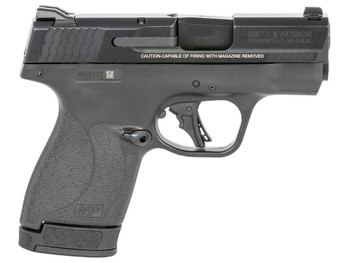
Smith & Wesson 13248 M&P Shield Plus Micro-Compact Frame 9mm Luger 10+1/13+1, 3.10" Black Armornite Stainless Steel Barrel & Serrated Slide, Matte Black Polymer Frame, No Safety
Smith & Wesson
$407.10The Shield Plus packs a 3.1" Armornite‑finished barrel into a 6.1" overall length, delivering a truly pocket‑sized platform without sacrificing the 9mm’s proven performance. Its striker‑fire action...$407.10 -
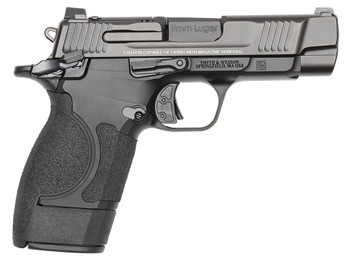
S&W CSX 13958 E-SERIES 9MM 3.6 10R TS BLK
Smith & Wesson
$603.75The CSX E‑Series blends micro‑compact dimensions with a full‑size grip feel, thanks to its modular grip adapter that lets you shift between micro‑compact and compact frame sizes. The aluminum alloy...$603.75 -
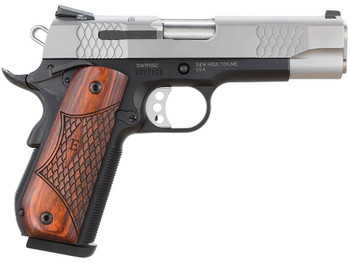
Smith & Wesson 108485 1911 E-Series 45 ACP 4.25" Barrel 8+1, Black Round Butt Scandium Frame, Satin Stainless Steel Slide, Laminate Wood Grip, Manual Grip & Thumb Safety
Smith & Wesson
$1,626.10The SW1911SC E-Series blends the time‑tested 1911 single‑action platform with a modern scandium alloy frame, shaving off a few ounces of weight without compromising strength. The stainless‑steel...$1,626.10 -
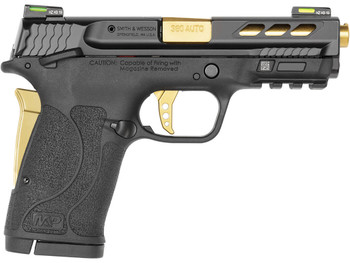
Smith & Wesson 12719 Performance Center M&P Shield EZ M2.0 380 ACP 3.80" 8+1 Black Black Armornite Stainless Steel Slide Black Polymer Grip Gold Colored Accents
Smith & Wesson
$545.10The ported barrel and slide lightening cuts on this Shield EZ M2.0 shave off a noticeable amount of muzzle flip, letting the slide snap back faster and keeping the point of aim steady. Pair that with...$545.10 -
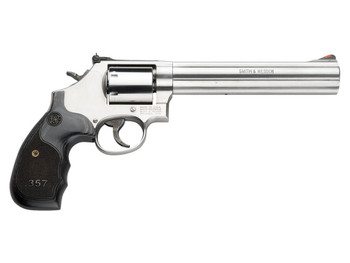
Smith & Wesson 150855 Model 686 Plus 38 S&W Spl +P, 357 Mag 7rd 7" Stainless Steel Barrel & Cylinder Satin Stainless Steel Frame with Black & Silver Custom Wood Grip & Red Ramp Front Sight
Smith & Wesson
$992.45The 7‑inch barrel on this L‑frame revolver extends the sight radius, making the red‑ramp front sight and adjustable rear sight a dead‑on combination for crisp, repeatable shots. Stainless steel...$992.45 -
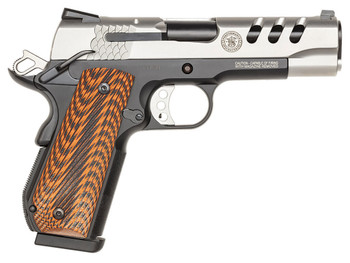
Smith & Wesson 170344 1911 Performance Center 45 ACP 4.25" Throated Barrel 8+1, Black Scandium Frame, Ported Matte Stainless Steel Slide, G10 Custom Wood Grip, Ambidextrous Safety
Smith & Wesson
$1,775.60The 1911 Performance Center’s scandium‑alloy frame is the first thing you notice – it shaves a few ounces off a traditional steel frame, bringing the gun down to a manageable 63.6 oz while keeping...$1,775.60 -
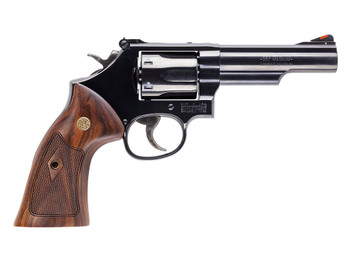
Smith & Wesson 14046 Model 19 K-Frame 357 Mag 6 Shot 4.25" Blued Carbon Steel Barrel, Cylinder & Frame, Checkered Wood Grip, No Safety
Smith & Wesson
$1,032.70The 4.25‑inch barrel gives the Model 19 a balanced feel that’s quick on the draw yet still offers a respectable sight radius for accurate shooting. Paired with the classic blued carbon‑steel finish,...$1,032.70 -
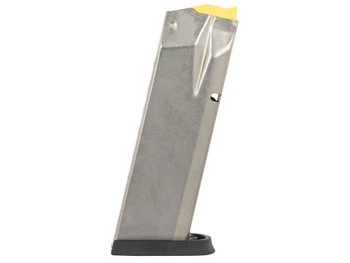
Smith & Wesson 3012992 M&P M2.0 15rd 10mmAuto
Smith & Wesson
$36.28The feed lips on this 15‑round M&P M2.0 magazine are cut to the exact tolerances Smith & Wesson uses on its factory mags, so you get the same smooth cycling you expect from the original pistol. The...$36.28 -
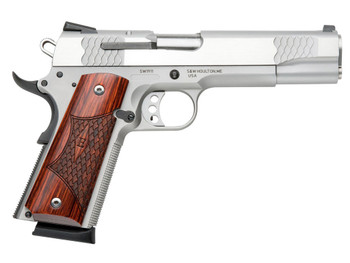
Smith & Wesson 108482 1911 E-Series Serrated Frame 45 ACP 8+1 5" Stainless Steel Barrel, Satin Stainless Serrated Slide & Frame w/Beavertail, Laminate Wood Grip
Smith & Wesson
$1,098.25The 5‑inch barrel on this SW1911 E‑Series gives the classic 1911 platform its famed steadiness, making follow‑up shots smooth and on‑target. Paired with a satin‑stainless finish, the slide and frame...$1,098.25 -
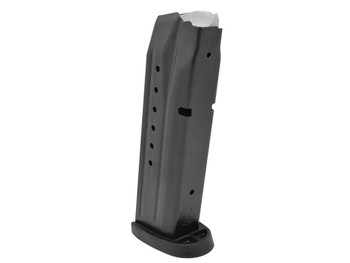
Smith & Wesson 3000247 M&P 15rd 9mmLuger Blued Steel
Smith & Wesson
$36.28The M&P full‑size 9mm pistol demands a sturdy, reliable feed system, and this 15‑round steel magazine delivers exactly that. Its blued steel construction offers the classic look while standing up to...$36.28 -
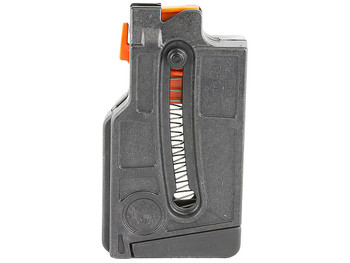
Smith & Wesson 199240000 M&P 10rd 22LR Fit S&W M&P 15-22 Black Polymer
Smith & Wesson
$21.51The short‑body magazine slots into the M&P 15‑22 lower and delivers a reliable ten‑round feed of .22 LR ammunition. Its polymer construction keeps the weight down while standing up to the abuse of...$21.51 -
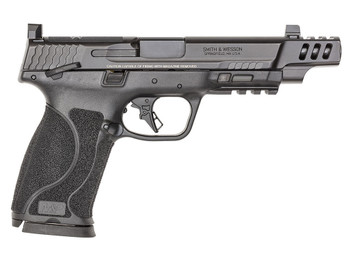
Smith & Wesson 13915 M&P PC M2.0 Full Size 10mm Auto 15+1 5.60" Black Armornite Ported Stainless Steel Barrel, Black Armornite Optic Cut/Serrated Stainless Steel Slide & Polymer Frame w/Picatinny Rail
Smith & Wesson
$732.55The M&P M2.0 Performance Center 10mm drops a 5.6" ported stainless‑steel barrel into a full‑size, striker‑fire platform. The Armornite finish on both barrel and slide protects the gun from the harsh...$732.55 -
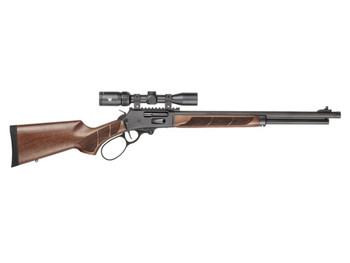
Smith & Wesson 14829 1854 Combo 45-70 Gov 6+1 20" Black Armornite Threaded Barrel, Black Armornite Stainless Steel Receiver w/Picatinny Rail, Walnut Forend & Fixed Stock, Vortex Crossfire HD 2-7x32mm
Smith & Wesson
$1,479.00The 1854 lever‑action platform gets a modern makeover with a 20‑inch stainless‑steel barrel finished in Armornite. The 11/16×24 threads at the muzzle let you bolt on a muzzle brake, suppressor...$1,479.00 -
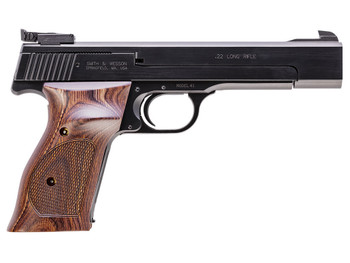
Smith & Wesson 130511 41 Full Size Frame 22 LR 10+1, 5.50" Blued Button Rifled Steel Barrel, Serrated Slide & Frame, Checkered Wood Target Grip
Smith & Wesson
$2,075.75The Model 41’s 5.5" button‑rifled barrel is the heart of its reputation – a tight, repeatable bore that lets .22 LR rounds exit with minimal dispersion, making it a favorite on the bench and at the...$2,075.75 -
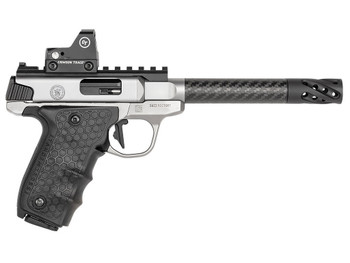
Smith & Wesson 12081 Performance Center Victory Target 22 LR 6" CF MB 10+1 Stainless Steel Tandemkross Black HiveGrip with Integrated Target Thumb Rest Grip Red Dot
Smith & Wesson
$931.50The SW22 Victory Target’s 6‑inch carbon‑fiber barrel paired with a custom muzzle brake makes it a true competition‑ready .22 LR platform. The barrel’s carbon‑fiber construction keeps the pistol light...$931.50 -
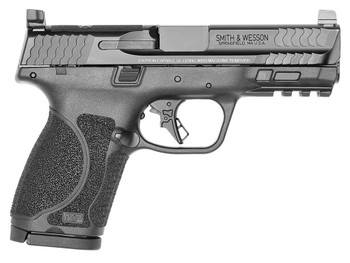
Smith & Wesson 13563 M&P M2.0 Compact 9mm Luger 15+1, 4" Black Armornite Steel Barrel & Optic Cut/Serrated Slide, Matte Black Polymer Frame w/Picatinny Rail
Smith & Wesson
$647.45The optics‑cut slide is the centerpiece – it takes a range of slide‑mounted red‑dot optics via seven mounting plates, yet you still have co‑witness white‑dot front and rear sights for backup. That...$647.45 -
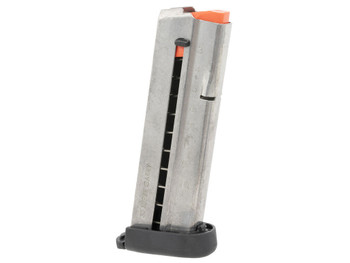
Smith & Wesson 3015318 M&P Shield 10rd 30SuperCarry Fits S&W M&P Shield EZ
Smith & Wesson
$33.60If you run a Shield EZ in .30 Super Carry, the factory mag can be hard to find. This steel 10‑round replacement drops right into the grip, feeding each round cleanly thanks to its OEM‑spec feed lips...$33.60 -
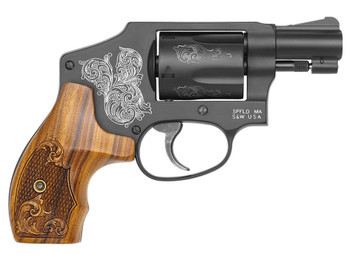
Smith & Wesson 150785 Model 442 38 S&W Spl +P 5 Shot 1.88" Engraved Black Carbon Steel Barrel/Cylinder, Engraved Black Aluminum J-Frame, Engraved Wood Grip, Mahogany Presentation Case
Smith & Wesson
$830.30The Model 442’s 1.88‑inch barrel puts the revolver’s balance right at the hand, making it quick to bring on target. The carbon‑steel barrel and cylinder are matte‑black and laser‑engraved, so you get...$830.30 -

Smith & Wesson 12436 M&P Shield EZ M2.0 Compact Slim 9mm Luger 8+1 3.67" Black Armornite Barrel & Serrated Slide, Matte Black Polymer Frame w/Picatinny Rail Black Polymer Grips Right Hand
Smith & Wesson
$501.40The M&P Shield EZ M2.0 packs a 3.68" Armornite‑finished barrel into a micro‑compact package, giving you a crisp, low‑recoil 9mm platform that’s ready for home or concealed carry. Its internal...$501.40 -
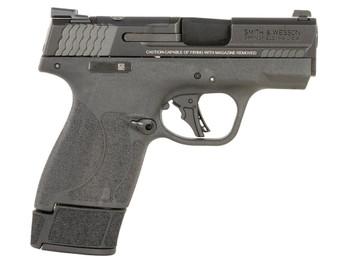
Smith & Wesson 14196 M&P9 Shield 9mm Luger 15+1 3.10" Black Armornite Barrel, Optic Ready/Serrated Slide, Black Frame
Smith & Wesson
$479.67The slide’s optic‑ready cut lets you slap a compatible micro red‑dot on the pistol in seconds, while the front‑to‑rear serrations give a firm grip for press‑check and slide manipulation. Pair that...$479.67 -
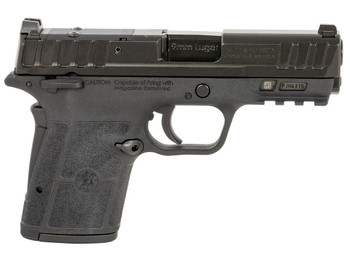
Smith & Wesson 13732 Equalizer Micro-Compact 9mm Luger 10+1 3.68" Black Armornite Steel Barrel, Optic Ready/Serrated Slide, Black Polymer Frame w/Picatinny Rail, Black Textured Polymer Grips
Smith & Wesson
$509.45The Equalizer’s 3.675" Armornite‑finished barrel gives a longer sight radius than most micro‑compacts, translating into tighter groups on the range while the slide’s deep serrations let you rack the...$509.45 -
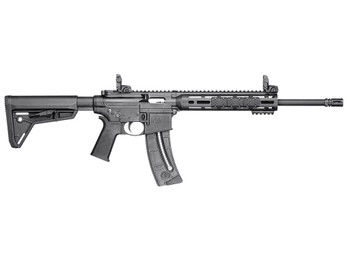
Smith & Wesson 10213 M&P15 Sport 22 LR 25+1 16.50" Carbon Steel Barrel, Adjustable Magpul MOE SL Stock, Magpul M-Lok Mounting System, MagPul Folding MBUS Sights, Functioning Charging Handle, Optics
Smith & Wesson
$541.65The M&P15‑22 Sport MOE SL drops the .22 LR cartridge into a familiar AR‑style layout, giving you the ergonomics of a modern sporting rifle with the low recoil of rimfire ammo. Its 16.5" carbon‑steel...$541.65 -
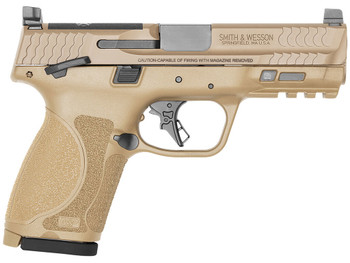
S&W 14100 MP M2.0 *ST COM 9MM 4 10R FDE
Smith & Wesson
$647.45The optics‑cut slide is the centerpiece of this compact 9mm, letting you mount a red‑dot sight without aftermarket machining. Pair that with the flat‑face trigger and the pistol tracks tightly,...$647.45 -

S&W M&P9 13971 METAL 9MM 4.25 HOLO 17R GRY
Smith & Wesson
$968.25The M&P9 M2.0 Metal drops a rigid aluminum‑frame platform into a full‑size 9mm pistol, marrying lightweight construction with a solid metal slide. Its 4.25" barrel is finished in gray Cerakote,...$968.25 -
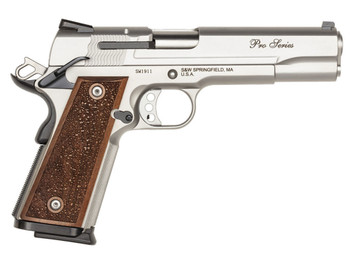
Smith & Wesson 178017 1911 Performance Center Pro Full Size Frame 9mm Luger 10+1, 5" Stainless Steel Barrel, Matte Silver Serrated Stainless Steel Slide & Frame w/Beavertail, Wood Grip
Smith & Wesson
$1,171.28The SW1911 Pro Series drops the classic 1911 silhouette into a 9mm package, keeping the single‑action feel that makes the platform so beloved. A 5‑inch matte‑silver barrel delivers a smooth,...$1,171.28 -
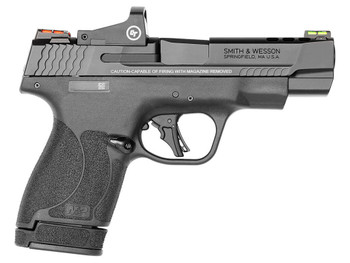
Smith & Wesson 13253 Performance Center M&P Shield Plus 9mm Luger 4" Ported 10+1,13+1 Black Matte Black Armornite Stainless Steel Ported Slide Black Polymer Grip (No Manual) Crimson Trace Red Dot
Smith & Wesson
$856.75The ported 4‑inch barrel and slide are the first things you notice—gas is vented right off the muzzle, flattening recoil and keeping the sight picture steady for quick follow‑ups. Pair that with a...$856.75 -
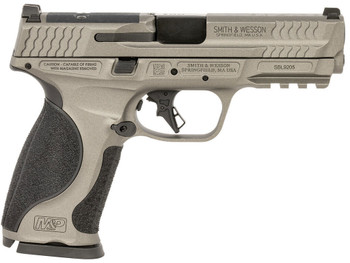
Smith & Wesson 14161 M&P M2.0 Full Size Frame 9mm Luger 10+1 4.63" Black Steel Barrel, Gray Optic Cut/Serrated Steel Slide, Gray Aluminum Frame w/Picatinny Rail, Black Polymer Grip
Smith & Wesson
$874.00A 4.25‑inch barrel gives the M&P9 M2.0 a sight radius that’s long enough for precise aiming yet short enough to keep the gun agile in tight spots. Coupled with a 7.4‑inch overall length, the balance...$874.00 -
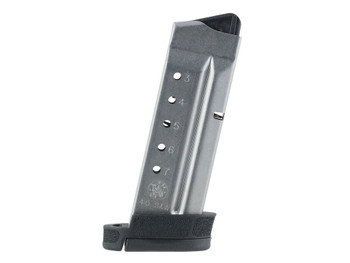
Smith & Wesson 3009877 M&P Shield 7rd 40S&W Blued
Smith & Wesson
$33.60The moment you drop this magazine into the Shield’s well you feel the solid click of a perfect fit. The stainless‑steel body slides in cleanly, and the finger‑rest extension gives the pistol a more...$33.60
Global Ordnance Brand Monograph · 1852
Inside Smith & Wesson: History, Engineering & Buying Guide
Horace Smith and Daniel Baird Wesson first partnered in Norwich, Connecticut, in 1852 to build lever-action repeating firearms - a design that eventually evolved into the Henry and Winchester rifles - before re-forming in Springfield, Massachusetts, in 1856 to manufacture the Model 1, the world's first successful revolver firing self-contained metallic cartridges. For more than 170 years, Smith & Wesson shaped American law enforcement, military, and civilian sidearms through its J-, K-, L-, N-, and X-frame revolvers, classic stainless semi-autos, and the modern M&P striker-fired line. In October 2023, the company opened its 650,000-square-foot corporate headquarters and manufacturing campus in Maryville, Tennessee.
Origins, Founder & Early Milestones
When Horace Smith and Daniel Wesson dissolved their first partnership in 1855 after selling their Volcanic repeating patents to Oliver Winchester's investors, they immediately spotted a far larger opportunity: Rollin White's 1855 patent for a bored-through revolver cylinder. Securing exclusive rights to White's patent, Smith & Wesson opened a factory in Springfield, Massachusetts, and launched the .22 Short Model 1 revolver in 1857. Demand exploded during the American Civil War because soldiers could reload brass rimfire cartridges in seconds instead of measuring loose black powder, balls, and percussion caps.
After White's patent expired in 1869, Smith & Wesson leaped ahead with large-frame top-break revolvers, notably the Model 3 Schofield and Russian models adopted by Imperial Russia and U.S. cavalry troops. In 1899 the company introduced its most influential revolver architecture: the Hand Ejector Military & Police (later Model 10) built on the medium K-frame and chambered for Smith & Wesson's newly developed .38 Special cartridge. More than six million Model 10 revolvers were produced, arming American police departments and Allied aircrews for nearly a century.
Landmark Platforms & Engineering Breakthroughs
Smith & Wesson's 20th-century engineering defined modern revolver metallurgy and cartridge development. Partnering with Winchester in 1935, S&W unveiled the Registered Magnum on its heavy N-frame, launching the .357 Magnum era, and teamed with Remington in 1955 to introduce the Model 29 in .44 Magnum. Meanwhile, the compact five-shot J-frame (Chiefs Special Model 36 and Airweight 642) became the standard backup and concealed-carry revolver, while the 1980 L-frame (Model 586 and stainless 686) solved K-frame forcing-cone wear under heavy magnum diets. In 2003, the massive X-frame Model 500 introduced the .500 S&W Magnum, one of the most powerful production handgun cartridges ever made.
In semi-automatics, Smith & Wesson produced the Model 39 in 1954 - the first American double-action 9mm Luger pistol - and supplied generations of police agencies with stainless 5906 and 4506 pistols while co-developing the .40 S&W cartridge with Winchester in 1990. In 2005, S&W launched the polymer-framed, striker-fired M&P (Military & Police) series, refined in 2017 into the steel-chassis M&P M2.0 with an extended stainless frame insert, crisp flat-face triggers, and an 18-degree natural grip angle. The slim M&P Shield and high-capacity Shield Plus (10+1 and 13+1 rounds) sold in the millions, followed by the soft-recoiling Shield EZ, the folding FPC carbine, the aluminum-framed M&P Metal, the Bodyguard 2.0 in .380 ACP, and the Model 1854 lever-action rifle in .44 Magnum and .45 Colt.
Industry Position, Competitors & Modern Lineup at Global Ordnance
Relocating its headquarters, assembly, and distribution to Blount County in Maryville, Tennessee, in October 2023 positioned Smith & Wesson for rapid new-product launches while preserving specialized forging work in Massachusetts and Maine. Across the U.S. market, the M&P M2.0 and Shield Plus compete directly with Glock, SIG Sauer P320/P365, Springfield Armory Hellcat/Echelon, and Walther Arms PDP. In wheelguns, S&W's J-, K-, L-, and N-frame classics battle Sturm, Ruger & Co., Colt, and Taurus, while the M&P15 Sport III rifle contends in 5.56 NATO carbines and the Model 1854 lever-action challenges Henry Repeating Arms and Ruger's Marlin line.
At Global Ordnance, customers regularly outfit M&P M2.0 Optics Ready and Shield Plus pistols with Holosun or Trijicon optics, Streamlight lights, AmeriGlo tritium sights, and Galco, Safariland, or DeSantis holsters. Revolver enthusiasts stock up on Federal Ammunition, Hornady Critical Defense, and Speer Gold Dot loads in .38 Special, .357 Magnum, and .44 Magnum, alongside Hogue grip upgrades.